
Remote FAT for Medical Diagnostic Equipment: When It Works and When It Doesn’t
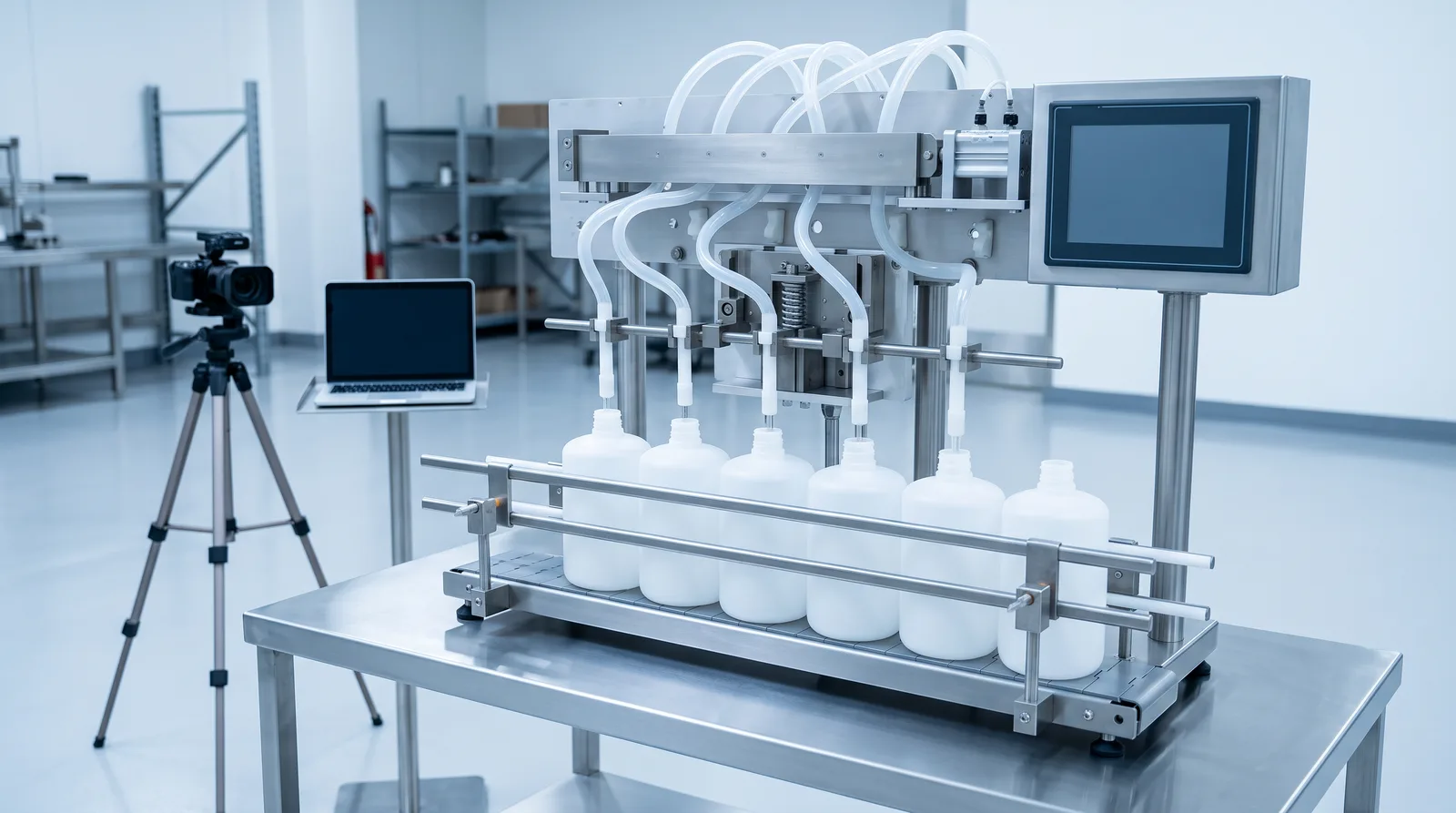
A remote FAT runs your factory acceptance test over live video and shared data instead of on site. It works when the URS is tight, the vendor is known, and nothing depends on touch or product contact. It fails when those aren’t true.
- A remote FAT works when your URS is tight enough that every test has a pass or fail answer a camera and a data export can prove.
- It fails when the proof depends on touch, close-up sight, product contact, or a vendor you haven’t worked with.
- The best answer is usually a split.
- Run the software and data tests remotely.
- Run the physical ones on site or move them to SAT.
A remote FAT is the same test run through a camera and a data file
A remote FAT keeps the protocol, the acceptance criteria, and the signatures. It changes where you sit. The vendor runs each test at their shop. Your team watches live, asks for raw data exports, and signs from your own building.
It saves travel. But the protocol doesn’t care where you sit. The evidence does, and some evidence doesn’t survive a video feed.
Before you decide anything, read your URS. If it’s thin, nothing below will rescue the FAT.
A remote FAT works when the URS leaves nothing to interpret
In 2001 I was handed a filling machine to FAT with no URS at all. I spent a week mapping the HMI and inventing the tests as I went. Nobody could have run that FAT remotely, because nobody knew what a pass looked like.
A tight URS flips that. Every requirement carries a number, a test method, and a pass line. A camera shows a screen. A data export proves a number. Remote works on those.
I’d want four conditions before agreeing to it.
- Every acceptance criterion is a measurement or a yes/no, not a judgment call.
- You’ve bought from this vendor before, and their documents held up.
- The machine runs on water or a surrogate, so no product touches it at FAT.
- The risk sits in controls and software, not in parts you’d have to touch or see up close.
I’ve watched remote work at the other end of a project too. During COVID, I ran a program with one fill unit for the US site and one for the UK site. The UK unit was supported remotely. It came together because the URS and GAMP documents were already airtight, and the first machine finished with no change orders.

A remote FAT fails when the proof is something you have to touch or see up close
Reagents foam. Foil seals peel or they don’t. A nozzle drips at the end of a stroke, or it doesn’t. You can point a camera at all of that and still miss what a person standing next to the machine catches in seconds.
Three failures show up again and again.
- Product-contact behavior. FAT usually runs on a surrogate. Remote makes that gap wider, because you can’t judge how the real reagent will behave from a video of water.
- A new vendor. I hate to say it, but some automation companies lie about their skill levels. A remote FAT hands a new vendor the camera angle. Standing next to the machine is how you find out what they actually built.
- Access. The Disney lesson I carry everywhere is simple. Don’t put a bolt where a tool cannot get to. You can’t judge that on video. Every machine has four relationships, management, operator, maintenance, and engineering, and remote FAT serves engineering far better than the other three.

The decision table
| Factor | Remote can work | Go on site |
|---|---|---|
| URS quality | Every criterion is measurable | Any criterion needs judgment |
| Vendor history | Repeat vendor, documents held up | First project together |
| Product contact | Water or surrogate only | Reagent, beads, or foil in play |
| What’s being proven | Controls, software, data, alarms | Mechanics, sealing, ergonomics |
| Maintenance and operator access | Already proven on a sister machine | New layout, new station design |
| Rework risk | Fixes are software changes | Fixes need hardware changes |
Move these checks to SAT instead of forcing them onto video
Splitting is cleaner than arguing about camera resolution. Write it into the URS and the purchase order up front.
- Maintenance access and clearances
- Operator reach, guarding, and HMI usability on the floor
- Product-contact performance on your actual product
- Utilities, facility interfaces, and anything that depends on your building
These tests don’t disappear. They move to SAT, which is where they belonged anyway. Tie the final payment milestone to passing them.
How to run the remote part so the evidence holds up
- Put remote access, recordings, and raw data exports into the PO before the schedule exists.
- Send the protocol early and agree on the order of tests.
- Keep sessions short, one function or test group at a time.
- Use more than one camera angle on anything physical.
- Export raw data with timestamps and file it with the protocol.
- Record every session and keep the recordings with the signed record.
- Write the punch list the same day, with an owner and a date.
- Get your quality team to accept the remote approach in writing before you schedule.
The last one matters most. Whether remote evidence can stand in for qualification evidence is your quality team’s call. That call rests on a written rationale. QMSR took effect on February 2, 2026, aligning FDA’s rule with ISO 13485, and that’s the framework your quality team is working in.
Three scenarios where the answer changes
- A repeat machine from a vendor you know, with a software revision. Remote. The risk is in the code, the URS is already proven, and a data export settles it.
- A first reagent fill line from a new vendor. On site. Product behavior, a vendor you can’t yet trust, and hardware fixes if it fails. This is the case where a second trip costs more than the first.
- A cartridge assembly cell with a proven controls package. Split it. Run the controls, alarms, and data tests remotely. Send an engineer for the seal and weld checks, or move them to SAT.
About Reza Bashar
I’m a fractional equipment engineer for medical diagnostic manufacturers. I handle automation procurement from URS to validated machine, and I’ve done it on 96+ projects over 25 years. I came up through Walt Disney Imagineering. You hire me, I do the work, I train your team, and I get out.
Next step
Not sure which tests can go remote on your line? Book a Manufacturing Automation Assessment. Thirty minutes, and you leave knowing what to split.
Questions equipment engineers ask about remote FAT
Is a remote FAT acceptable to auditors?
Your quality team decides, and they decide on a written rationale. Auditors read evidence, not geography. Record why remote was acceptable for each test, and file the recordings and raw data with the protocol.
Does a remote FAT save money?
It saves travel. It doesn’t save money if it ends in a second trip to fix what a camera missed. Count the full cost, including a failed remote FAT that turns into an on-site repeat.
What equipment should never get a remote-only FAT?
Anything where pass or fail depends on product contact, touch, or access. Fill stations on foamy reagents, foil sealing, and torque checks qualify. So does any station maintenance has to reach every week.
Can I split the FAT?
Yes, and it’s often the right call. Run software, controls, and data tests remotely. Run mechanical, ergonomic, and product-facing tests on site, or write them into the SAT in the URS and PO.
How should I run the remote sessions?
Short ones, one function at a time. Send the protocol early, use more than one camera angle, export raw data with timestamps, record everything, and write the punch list the same day with an owner and a date.
What does the vendor need to agree to?
Remote access, recordings, raw data exports, and a PO that says which tests move to SAT. Settle this in the purchase order before you build the schedule, not the week before FAT.
The Bottom Line
Decide which tests go remote and which move to SAT, and write it into the PO before the schedule exists.
Reza Bashar at MEPSCo GAMP provides fractional automation engineering for medical diagnostic manufacturers, from URS development through FAT, SAT and IQ/OQ/PQ. If you are deciding which tests can go remote on your line, we start with your URS.