
Factory Acceptance Testing Checklist for Diagnostic Manufacturing Equipment
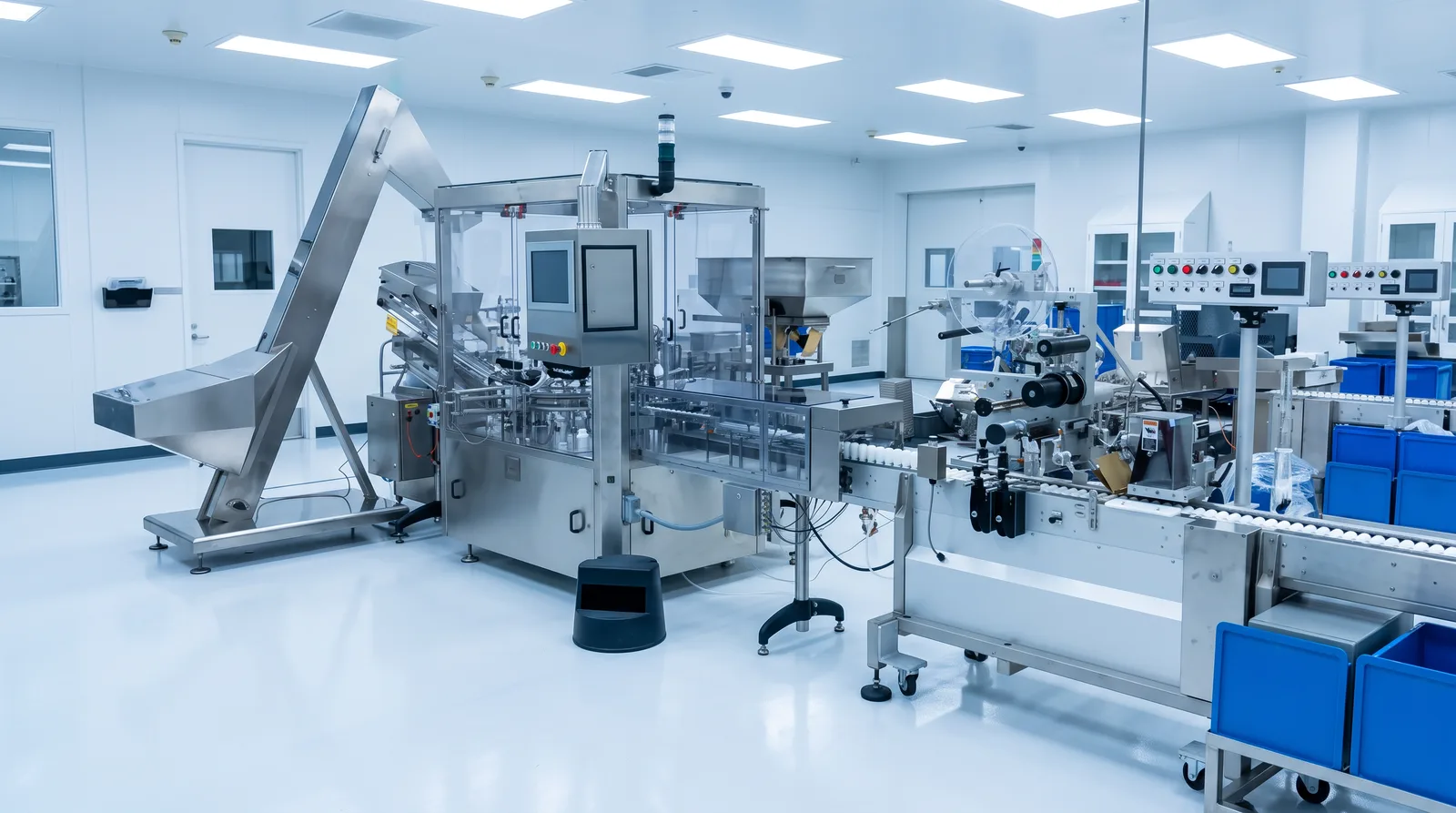
A factory acceptance testing checklist covers documents, safety, controls and data, process at rate, inspection challenges, changeover, and calibration. Each item needs a pass criterion from the URS and recorded evidence.
- A FAT is a witnessed test against your URS, not a demo, so every pass criterion has to be a number written before you travel.
- Work through seven sections: documents, build and safety, controls and data, process at rate, inspection challenge, changeover and maintenance, and calibration and close-out.
- Run real consumables and seed the machine with known bad parts, because a vision system that never sees a defect proves nothing.
- Use one punch list with classes, and never ship the machine with a Class A showstopper open.
Early in my career at a diagnostics manufacturer, I was asked to run a FAT on filling equipment that had been ordered with no URS. I asked what document I should test against. Nobody had an answer. So I sat with the machine for a week, mapped the HMI, and built the test from scratch.
That experience is why I write the FAT from the URS now. As a fractional automation engineer, I’ve run this process across close to a hundred projects. This is the checklist I’d hand a buyer.
It’s built for diagnostics consumable lines. Fill, cap, assemble, label, inspect.
What a FAT is, and isn’t
A FAT is a witnessed, protocol-driven test at the supplier’s site against your requirements, before shipment. SG Systems is blunt that a robust FAT isn’t a demo. It runs an approved protocol with pass/fail criteria. Kneat adds that FAT and SAT generate evidence for qualification but don’t replace IQ, OQ, or PQ.
There’s no universal template. Control Design says no set checklist exists, and each FAT follows the equipment and the customer’s requirements. So treat what follows as a spine.
The checklist
Every pass criterion comes from a number in your URS, no wider.
| Section | What to check | Pass criterion | Evidence |
|---|---|---|---|
| 1. Documents | Approved URS, signed FAT protocol, traceability matrix, drawings, software versions, manuals, spare parts list | Protocol signed before testing starts | Signed protocol and document log |
| 2. Build and safety | Guarding, E-stops, interlocks, door switches | Each device triggers the documented response | Witnessed log |
| 3. Controls and data | HMI logic, alarms, user levels, audit trail, lot and UDI data | Matches the functional spec | Screen captures and exports |
| 4. Process at rate | Run real consumables at the URS rate for the URS duration | URS rate, URS yield, stops within the URS limit | Raw run data |
| 5. Inspection challenge | Feed known good and known bad parts through vision, OCR, fill check, torque | Every bad part rejects, good parts pass within the URS false-reject limit | Challenge set log |
| 6. Changeover and maintenance | Format change, consumable swap, access to PM points | Within URS time, done by an operator | Timed observation |
| 7. Calibration and close-out | Certificates for every gauge used, punch list status | Certificates current, no Class A open | Certificates and punch list |
Kneat lists the usual FAT deliverables as the executed protocol, manuals, spare parts list, certificate of compliance, as-built drawings, and instrument calibration certificates. SG Systems adds raw data, software versions, and a punch list with owners and due dates.
Section 4 trips people up. Run real consumables, not substitutes. Fabrico warns against testing in a perfect environment. If your reagent foams, the FAT has to see it foam.
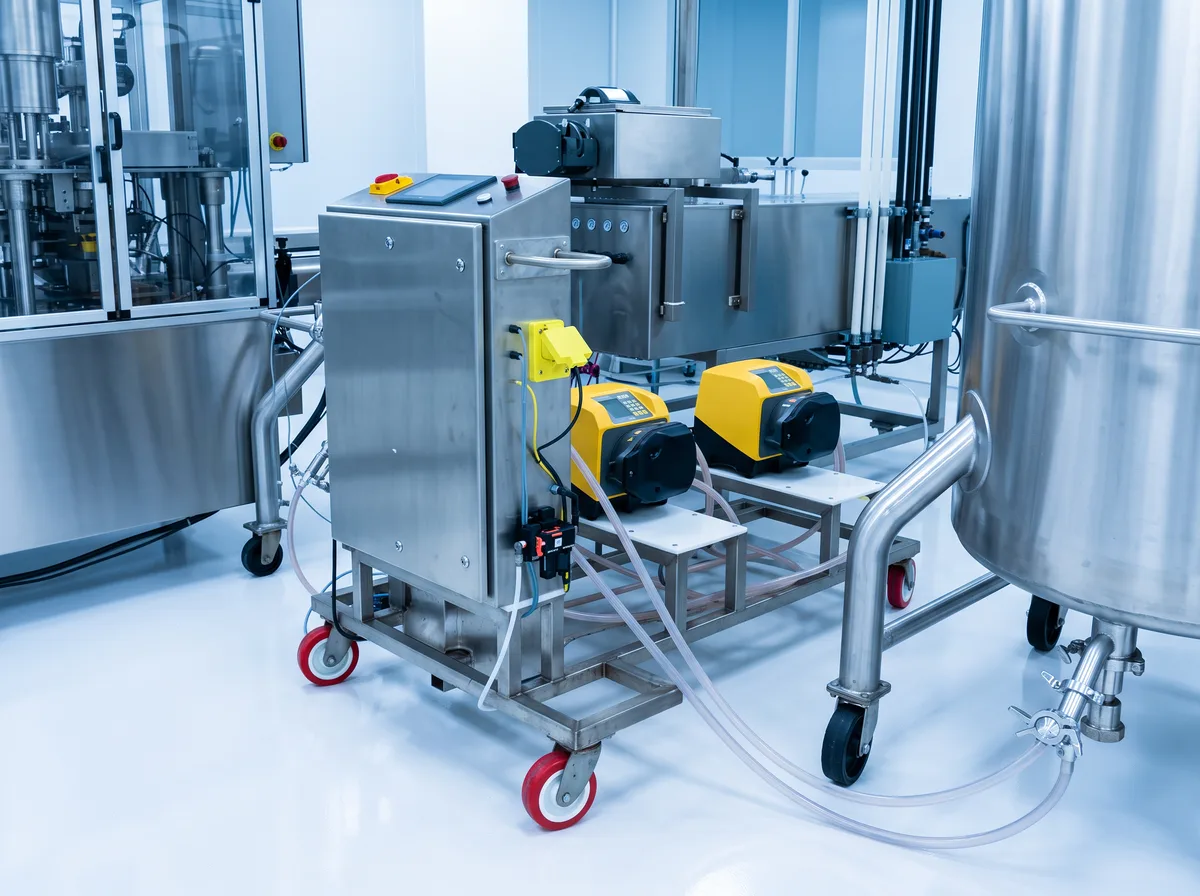
Section 5 is where I spend the most time. Seed the machine with bad parts. A vision system that never sees a defect proves nothing.

Red flags that say it isn’t a real FAT
- Acceptance criteria written in subjective language or missing measurable limits, per Techkrates
- “We’ll tune on site,” and quiet substitutions in parts or builds, per DBR77
- No raw data behind the summary
- No note on what was simulated and what ran for real
- A vendor who clearly hasn’t run the machine first
That last one is the biggest tell. A good vendor has already tested the machine against the URS and calls you when surprises are minimal. A bad one calls you over when 30 to 40 percent of the URS was never addressed. They just want the machine off their floor. The FAT shows you which company you hired.
Run the punch list like a contract
Use one punch list with classes. One FAT guide defines Class A as showstoppers, meaning the machine can’t ship. Put that in the purchase order.
Leverage matters too. Fabrico notes that unresolved punch items usually never get fixed once payment leverage is gone. Whatever you find becomes the SAT scope, so write it down. The SAT vs. FAT guide covers the handoff.
Remote FAT, and when it works
PMMI’s OpX network published a virtual FAT approach, and suggests moving some FAT functions offline ahead of time. Panelists on PackWorld said virtual FATs fit known equipment well and are harder for equipment that’s new to the plant. A custom diagnostics line is new equipment. I’d want someone on site.
How the FAT feeds validation
The FDA’s QMSR took effect February 2, 2026, and incorporates ISO 13485:2016 into 21 CFR Part 820. Process validation sits under ISO 13485 clause 7.5.6, per Pure Global’s crosswalk. A FAT doesn’t satisfy that. It feeds it.
If the FAT and SAT trace back to the URS, the FAT document separates cleanly into IQ and OQ. If requirements were missed, you invent new tests at the worst moment, when management wants product.
Best for buyers about to travel to a vendor site. Scenario one. No URS exists yet. Write it first. The URS guide shows how. Scenario two. The vendor sent a FAT protocol. Check every pass criterion for a number. Scenario three. Travel is hard. Pre-run the offline items, but keep section 4 and 5 in person.
Before you book the flight
Get the criteria on paper. Get the protocol signed. Pack a set of known bad parts.
If you’d like a second opinion on a protocol, a 30-minute Manufacturing Automation Assessment is a good place to start.
Questions buyers ask about FAT
How long does a FAT take?
No set length. It depends on the equipment and your requirements. My first took a week just to map the HMI.
Who attends a FAT?
Your engineer, someone from quality, and an operator. Control Design suggests project managers and operators too.
Can I accept a machine with open punch items?
Only for Class B items with an agreed close-out date. Never a Class A.
Do I need a FAT if I’ll do IQ and OQ anyway?
Yes. Fixing a flaw on the vendor’s floor costs far less than fixing it at your site.
Is a virtual FAT acceptable?
For known equipment, often. For a custom line, I’d go in person.
The Bottom Line
A FAT only protects you when every pass criterion is a number from your URS, so get the criteria on paper, get the protocol signed, and pack the known bad parts.
Reza Bashar at MEPSCo GAMP provides fractional automation engineering for medical diagnostic manufacturers, from URS development through IQ/OQ/PQ. If you are planning an automation project, reach out directly.