Equipment Engineer for Medical Device Manufacturers
Get 25+ years of GAMP-trained equipment engineering expertise on your project — without adding headcount.
An equipment engineer for medical device manufacturers manages the full procurement and validation lifecycle for production automation equipment — from writing the User Requirements Specification through IQ/OQ/PQ — ensuring every machine is released to manufacturing in a compliant, validated state under FDA and GMP requirements. MEPSCo GAMP provides this as a fractional service for IVD manufacturers, consumable diagnostics companies, and medical device CMO & CDMOs in San Diego and remotely across the U.S.
Here’s a problem that shows up in almost every early-stage and mid-size medical device company.
The product is ready. The manufacturing process is defined. Now you need production equipment — and someone who actually knows how to procure it, document it, qualify it, and release it to manufacturing without triggering a warning letter.
But that person is hard to find. A senior automation engineer with real GAMP documentation experience and actual project history in medical device manufacturing runs 200K+ annually once you factor in salary, benefits, and the three-to-six month ramp. And if the equipment project is a 9-month sprint, you don’t need them after that.
That’s the situation MEPSCo GAMP was built for.
Reza Bashar has led equipment engineering for 96+ completed projects across medical diagnostic manufacturing, IVD production, fill-finish automation, and consumable device assembly. He works on the manufacturer’s side — not as a vendor representative, not as a sales agent for automation companies. His job is to get your equipment purchased, validated, and released in a documented, audit-ready state.
What an Equipment Engineer Actually Does in Medical Device Manufacturing
Most companies think of an equipment engineer as someone who maintains machines after they’re installed.
That’s one part of it. But the more expensive part — the part where things go wrong — is procurement and validation.
An equipment engineer for a medical device manufacturer is responsible for getting the right machine, specified correctly, from a vendor who can actually deliver it, at a price that doesn’t balloon with change orders, in a timeline that doesn’t blow up your product launch.
That means writing a complete User Requirements Specification (URS) before a single vendor is contacted. It means knowing which questions to ask across mechanical engineering, electrical engineering, software, quality, and regulatory as well as maintenance and operation — so the URS captures what the machine actually needs to do, not just what someone thinks it needs to do.
It means running a vendor evaluation using a structured scoring methodology. Reviewing and negotiating on Factory Acceptance Testing. Managing Installation Qualification, Operational Qualification, and Performance Qualification. Writing SOPs. Producing the 22 document types that result in an automation line that can be easily defended in an FDA audit.
And then, once the machine is released to manufacturing, it means making sure the maintenance crew and the junior engineers who take it over understand how to keep it in a GMP-compliant state.
That’s what equipment engineering is in this industry.
The MEPSCo GAMP Process
One thing that separates fractional from full-time here: the process.
A full-time equipment engineer you hire has a resume and institutional knowledge. A fractional specialist who has done this across 96+ projects has something more repeatable — a documented methodology that works across IVD manufacturers, diagnostics companies, fill-finish CMO & CDMOs, and R&D-to-production transfers.
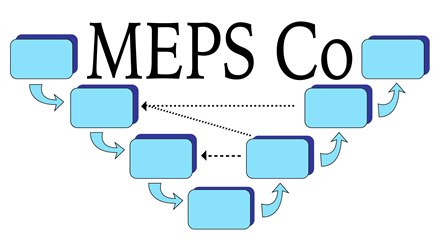
Every project runs through the same 8-step GAMP-aligned process.
Step 1: Customer Requirements Document (CRD)
Interview process to define what the project is actually trying to achieve before any vendor conversation happens. Most change orders trace back to skipping this step.
Step 2: User Requirements Specification (URS)
Interview every relevant discipline — mechanical, electrical, software, quality, regulatory, operations — to capture everything the machine needs to do. Not a wish list. A requirements document with specifics including but not limited to, space limitations, defect definitions, sample materials, and inspection criteria detailed enough that the automation vendor can price it accurately.
Step 3: Functional Requirements Specification / Functional Design Specification (FRS/FDS)
Translate the URS into what the system must functionally and physically deliver. This is where verbal requirements become reality in function and design.
Step 4: Factory Acceptance Testing (FAT)
Verify the machine at the vendor’s facility before it ships. Identifies issues when they’re still cheap to fix — before the machine is placed on your floor.
Step 5: Site Acceptance Testing (SAT)
Verify the machine performs as specified after installation at your facility.
Step 6: Installation Qualification (IQ)
Document that the machine was installed correctly per design specifications.
Step 7: Operational Qualification (OQ) and Performance Qualification (PQ)
Demonstrate that the equipment operates within defined parameters and consistently produces output that meets specifications.
Step 8: SOPs, Training Records, and Sustaining Documentation
Produce the operating procedures and training materials your team needs to keep the equipment in a validated state post-launch.
Most equipment projects start without a complete URS. That’s where the change orders come from. If you want to see what a complete specification process looks like before you go to vendors, Book a 30-Minute Call.
Why Manufacturers Hire a Fractional Equipment Engineer Instead of a Full-Time Hire
Full disclosure. This is the model we operate on, so there’s an obvious interest here. But the math tends to speak for itself.
A senior automation engineer in the life sciences sector earns between $140K and $190K annually — before benefits, payroll taxes, equity, or the administrative overhead of an employee on a regulated floor. Most equipment procurement projects run 9–18 months. After the machine is released to manufacturing, the day-to-day work shifts to the maintenance team and junior engineers who are already in-house.
You don’t need a senior equipment engineering expert on payroll permanently. You need one for the procurement cycle, validation cycle, and documentation sprint. Then you need someone to transfer knowledge to your team.
That’s the model. Come in. Do the work. Document it. Transfer it to the internal team. Move on when the project is done. Come back when the next project starts.
It’s worth being honest about when this doesn’t fit. If you’re running 8–10 simultaneous equipment projects and need constant daily engineering bandwidth, a full-time hire probably makes more sense. But for companies bringing 1–3 new lines through qualification in a given year, fractional is usually the right math.
Who This Is For
Not every medical device company is the right fit for this service.
MEPSCo GAMP works with companies that manufacture a consumable diagnostic, IVD reagent, lab component, or other device-as-a-product. Companies where the equipment is a purpose-built production asset — not a commodity fill system you can swap out.
The fit is strongest for:
- IVD manufacturers scaling R&D processes into production lines for the first time
- Consumable diagnostics companies that need GAMP-compliant documentation for FDA audit readiness
- Medical device CMO & CDMOs handling equipment qualification for multiple product lines or multiple clients
- Companies in the R&D-to-manufacturing transfer phase that have a validated lab process and now need production-scale equipment
The fit is weaker for catheter companies, standard Pharma products, device-as-a-component manufacturers, or companies that need ongoing daily floor engineering rather than project-based procurement and validation work.
GAMP Documentation Costs About 10% of Equipment Cost. Here’s Why That Matters.
There’s a figure that surprises most procurement teams when they hear it.
GAMP documentation — the full package from URS through IQ/OQ/PQ, SOPs, and training records — typically runs about 10% of the equipment purchase price. That’s not an overhead cost. That’s the cost of being able to legally run the machine in a GMP environment.
A $500,000 filling line without compliant documentation isn’t a $500,000 asset. It’s a liability that can’t be used until the paperwork is done. Or until the FDA auditor asks for it.
What changes when documentation is built correctly from the start is that the 10% is predictable. The problems start when documentation is an afterthought — when the machine has already been installed and someone is trying to reverse-engineer a URS from a vendor spec sheet. That’s when the 10% becomes 25% and the timeline extends by six months.
What 96+ Projects Across 25+ Years Looks Like
Some specifics worth knowing.
| What | Detail |
|---|---|
| Completed equipment projects | 96+ |
| Years of GAMP engineering experience | 25+ |
| GAMP document types produced per project | Up to 22 |
| Geographic base | San Diego, CA (remote projects available nationwide) |
| Documentation cost as % of equipment cost | ~10% (proprietary benchmark across project history) |
External benchmarks add context. Predictive maintenance programs alone reduce machine downtime by 30–50% and extend equipment life by 20–40%, according to McKinsey analysis. Proper qualification and documentation is what makes predictive maintenance programs defensible in a regulated environment.
The FDA’s Quality Management System Regulation (QMSR), which aligns 21 CFR Part 820 with ISO 13485:2016, sets the compliance baseline for equipment documentation. Every project MEPSCo GAMP delivers is built against that standard.
What Happens When Equipment Procurement Goes Wrong
A common pattern.
A manufacturer needs an automated production equipment. They go to one or two vendors, get quotes, pick the lower number, and place the order. The machine arrives. It’s not quite right — some materials weren’t specified, the inspection camera resolution isn’t matched to the defect types, the integration with the existing line wasn’t detailed enough.
Change orders start.
Each one is small. A different bracket material here. A cable management change there. An inspection system upgrade because the original spec didn’t define defect criteria. By the time the machine ships, the change orders have added 15–25% to the original quote and delayed delivery by four to eight weeks.
Then the machine arrives and no one has written the IQ protocol yet. That’s another 60–90 days.
The problem usually traces back to one document. The URS wasn’t a requirements document. It was a wish list.
“We should have an inspection system” is a wish. “An inspection system will be incorporated, inspecting for these specific defect types, at these dimensional tolerances, using a camera with resolution adequate to detect [specific size] defects at line speed” is a requirement. The difference between those two sentences is where the change order budget comes from.
Before You Decide
What qualifications does MEPSCo GAMP bring to equipment engineering projects?
Reza Bashar has 25+ years of direct equipment engineering experience in medical device manufacturing, with 96+ completed projects across IVD production, consumable diagnostics, fill-finish automation, and R&D-to-production transfers. The process is built around GAMP 5 compliance and aligned with FDA’s QMSR requirements under 21 CFR Part 820. Projects include full documentation from CRD through SOPs, not just the procurement phase.
How is this different from hiring a staffing firm for a contract engineer?
Short answer: scope and accountability. A staffing firm places an engineer. MEPSCo GAMP owns the process. Reza brings a documented 8-step methodology developed across 96+ projects, produces the full GAMP documentation package, and transfers knowledge to your internal team so the project doesn’t collapse when he leaves. A contract engineer from a staffing firm arrives with a resume. What gets produced is whatever they know how to produce.
Can you work with companies outside San Diego?
Yes. Most phases of equipment engineering work can be handled remotely — URS development, documentation, vendor evaluation, and coordination. FAT and SAT typically require on-site presence at the vendor facility and your facility, respectively. Most projects combine remote phases with scheduled on-site visits.
How long does a typical equipment procurement and validation project take?
Three to six months on the short end for smaller equipment projects. Nine to eighteen months for a full production line with multiple qualification phases. The biggest variable is whether documentation starts at the right point in the process — projects where the URS is completed before vendor contact generally run on schedule. Projects where documentation is added retroactively almost always extend.
What does GAMP documentation cost, and is it separate from the engineering engagement?
GAMP documentation — URS through IQ/OQ/PQ, SOPs, Project Management and training records — typically runs about 10% of the equipment purchase price. That’s a rough benchmark across Reza’s project history, not a published industry standard. It’s built into the scope of work, not billed separately from the engineering engagement.
Is MEPSCo GAMP right for early-stage companies before FDA registration?
Depends on the stage. Companies in active R&D with no manufacturing intent yet probably don’t need this now, however Design for Manufacturability could be a concern that MEPSCo could assist with. Companies that have a validated lab process and are beginning to scope production equipment — even if they’re pre-commercial — are often exactly the right point to engage. Building GAMP documentation infrastructure early is substantially cheaper than building it under audit pressure.
What’s the difference between an equipment engineer and an automation engineer in this context?
Same role, different job titles. The industry uses both interchangeably. What matters more than the title is whether the engineer has done GMP-compliant procurement, wrote a real URS, managed FAT and SAT, and produced the full validation package. That’s what determines whether the machine gets released to manufacturing or sits in a compliance hold.
Last updated: October 8, 2026
The Cost of Getting This Wrong Is Higher Than the Cost of Getting It Right
Every week an unqualified machine sits in a compliance hold costs money. Every change order that came from a vague URS costs more than the change order itself — it costs the timeline, the manufacturing schedule, relationship stresses and sometimes the product launch window.
The companies that engage equipment engineering expertise before procurement almost always spend less total — on the equipment, on the documentation, on the change orders that don’t happen — than the ones who try to figure it out internally and bring someone in to clean it up after.
If you’re beginning an equipment procurement project for IVD production, consumable diagnostics, or any regulated medical device line, and you want to understand what the process looks like before committing to anything, a 30-minute conversation is the right next step.
Not ready to talk yet? Start with the complete automation procurement guide for medical device manufacturers or review GAMP documentation costs and what drives them.