What a CDMO’s Automation Qualification Timeline Actually Looks Like Under Client Pressure
A CDMO that signs a client contract before the production equipment exists is already behind. The timeline for procuring, building, and qualifying that equipment doesn’t compress easily. Here’s what the realistic schedule looks like — and where it tends to break down.
- A CDMO that signs a client production date before the equipment exists is working against a deadline it didn’t set — and the qualification timeline doesn’t compress easily.
- The stages that get underplanned are the ones after delivery: FAT, IQ/OQ, PQ, and the QA documentation review — together often longer than the engineering itself.
- A realistic timeline for standard commercial equipment runs ~22 weeks (fast end) to ~30 weeks (mid-range) from URS to qualified production.
- The fastest path is problem-first: a complete URS before vendor selection, qualification protocols written before delivery, and a QA review that finds no gaps.
CDMOs win contracts on capability, then go build the capability.
That’s how it works. A diagnostics company needs a fill line for a new reagent product. They evaluate CDMOs, pick one, sign a contract. Production is expected in five months. The CDMO doesn’t have the fill line yet. Now they need to procure it, qualify it, and start making product — under the production start date in the contract.
This is the automation procurement pressure that defines CDMO capital equipment decisions. And it’s different from how an in-house manufacturer buys equipment, because the deadline wasn’t internal. It was signed.
The question isn’t whether the timeline is tight. The question is where it breaks, and what the CDMO does about it before signing the next contract.
Why Standard Equipment Timelines Don’t Work for CDMOs
Standard equipment procurement for a manufacturer that owns their own production timeline has some flexibility built in. If the equipment is delayed six weeks, production pushes six weeks. Annoying. Not catastrophic.
A CDMO doesn’t have that flexibility. The client’s production schedule is in the contract. A six-week equipment delay doesn’t push your timeline. It pushes the client’s launch. That’s a different conversation — and a different risk level.
Most CDMO operations teams know the standard lead times for equipment in their product category. What catches them is the time that comes after delivery: FAT, site installation, IQ, OQ, PQ, and the documentation review before production release. That’s the part that doesn’t show up clearly in the vendor’s delivery estimate.
A vendor quotes a 14-week build time. The CDMO plans for 14 weeks. What they didn’t calendar: 3 days at the vendor for FAT, 2 weeks for freight and installation, 3–5 weeks for IQ/OQ execution and documentation review, 4–8 weeks for PQ if it runs product-specific, and QA sign-off before first production batch. A 14-week equipment delivery can easily put production at week 26 or beyond. That’s not a vendor failure. It’s a planning gap.
The Timeline Stages Most CDMO Teams Underplan
Not every stage gets the same attention in early project planning. These are the ones that regularly get compressed after the fact.
URS development. The URS comes first, before vendor quotes, before build, before anything. A proper URS for a CDMO fill line isn’t two pages. It covers the product parameters the line will run, the reagent characteristics that affect filling (viscosity, foamability, temperature sensitivity), the accuracy requirements at each fill volume, the throughput targets, the cleaning protocol requirements between products, and the GMP compliance requirements the documentation must satisfy. Writing that takes time. Getting it right takes even more. CDMOs under contract pressure often abbreviate this step. The timeline hit comes later as change orders.
FAT. Factory Acceptance Testing is conducted at the vendor’s facility before the equipment ships. A well-structured FAT catches problems before the machine is on your floor. The protocol needs to be written before the FAT date is scheduled, tested against the full operating parameters the URS describes, and documented in a way that carries into IQ. When FAT is treated as a shipping inspection rather than a qualification step, the problems that should have surfaced there surface at IQ or PQ instead — at much higher cost.
IQ/OQ sequencing. IQ and OQ run in sequence. IQ documents that the equipment was installed correctly, utilities are confirmed, and all components are present and as-built. OQ confirms the equipment operates within its documented operating range. Neither can be rushed without creating documentation gaps. Most qualification timelines allow 2–3 weeks for both, assuming the protocols are already written before installation. If the protocols are being written after installation, which happens when the URS wasn’t finished early, add 4–6 weeks.
PQ under CDMO-specific conditions. Performance Qualification is where CDMO qualification diverges from straightforward manufacturer qualification. A CDMO may need PQ runs for more than one client product, using the same equipment. Each PQ run requires a protocol, product-specific parameters, acceptable performance criteria, and executed records. If those criteria weren’t defined during URS, they have to be defined now. That adds scope. That adds time.
QA review and documentation close. When the qualification documentation is done, it goes to QA for review. This isn’t ceremonial. QA is looking for protocol deviations, missing records, unanswered observations from FAT, and document traceability from URS through PQ. Any gap sends it back. Most qualification documentation packages get sent back at least once. Planning for a 10-business-day QA review is optimistic. Two weeks is realistic. Thirty days is not unusual on a first qualification for a new equipment type.
What “Under Two Months” Actually Required
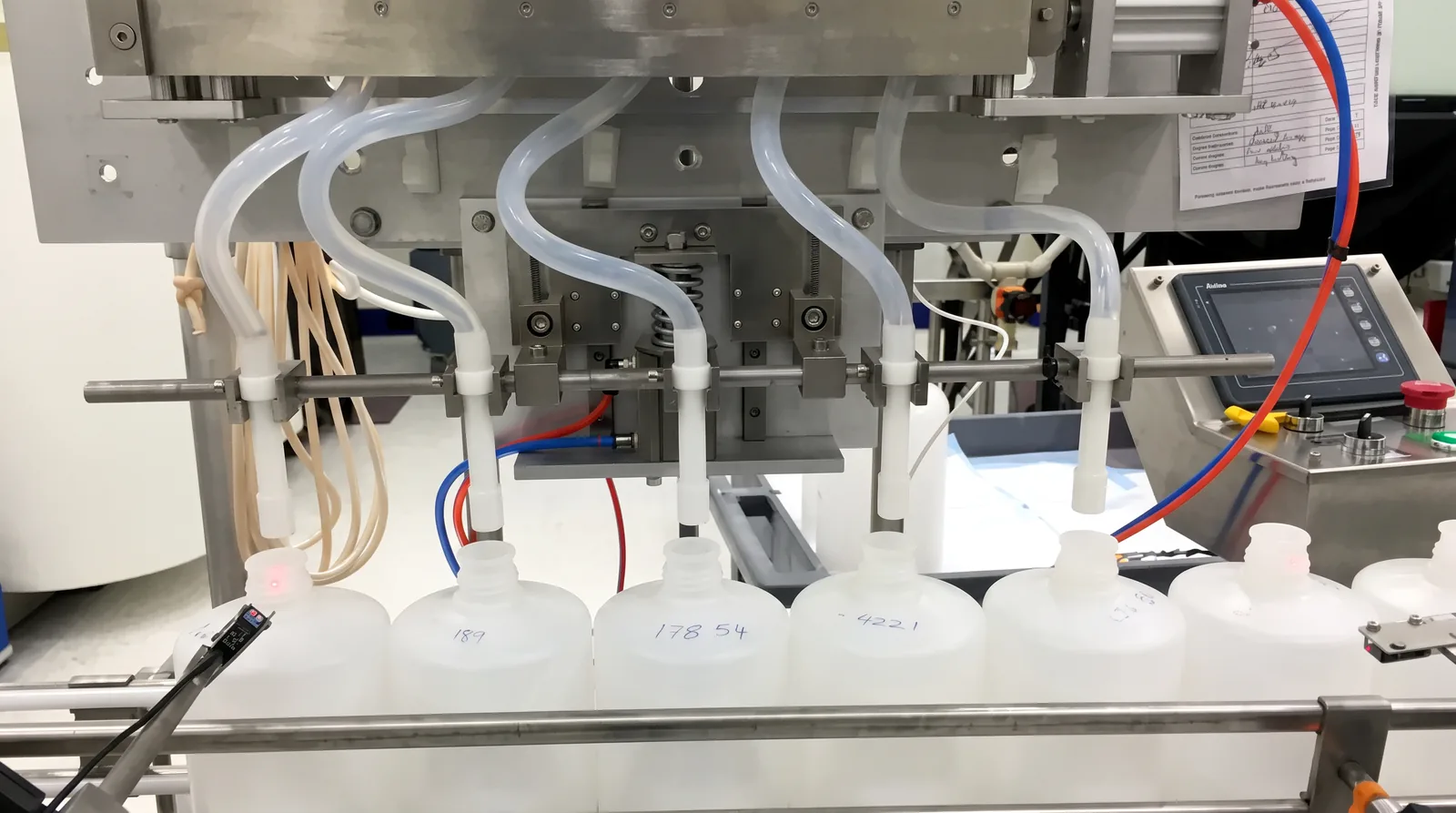
The Case Study 2 engagement — two custom fill units for a CMO in Carlsbad, California, handling a foamy reagent in an odd-shaped bottle — delivered in under 2 months. That timeline is real. It’s also not typical for standard equipment procurement.
What made it achievable was a combination of factors that don’t exist on most procurement timelines.
The scope was a custom design-and-build, not a standard commercial fill line. The commercial fill line path involves vendor selection, RFQ, quote comparison, PO, lead time, delivery, FAT, installation, and qualification — a process that runs 4–6 months on the fast end for standard equipment. Custom design-and-build starts at the problem instead of the equipment catalog.
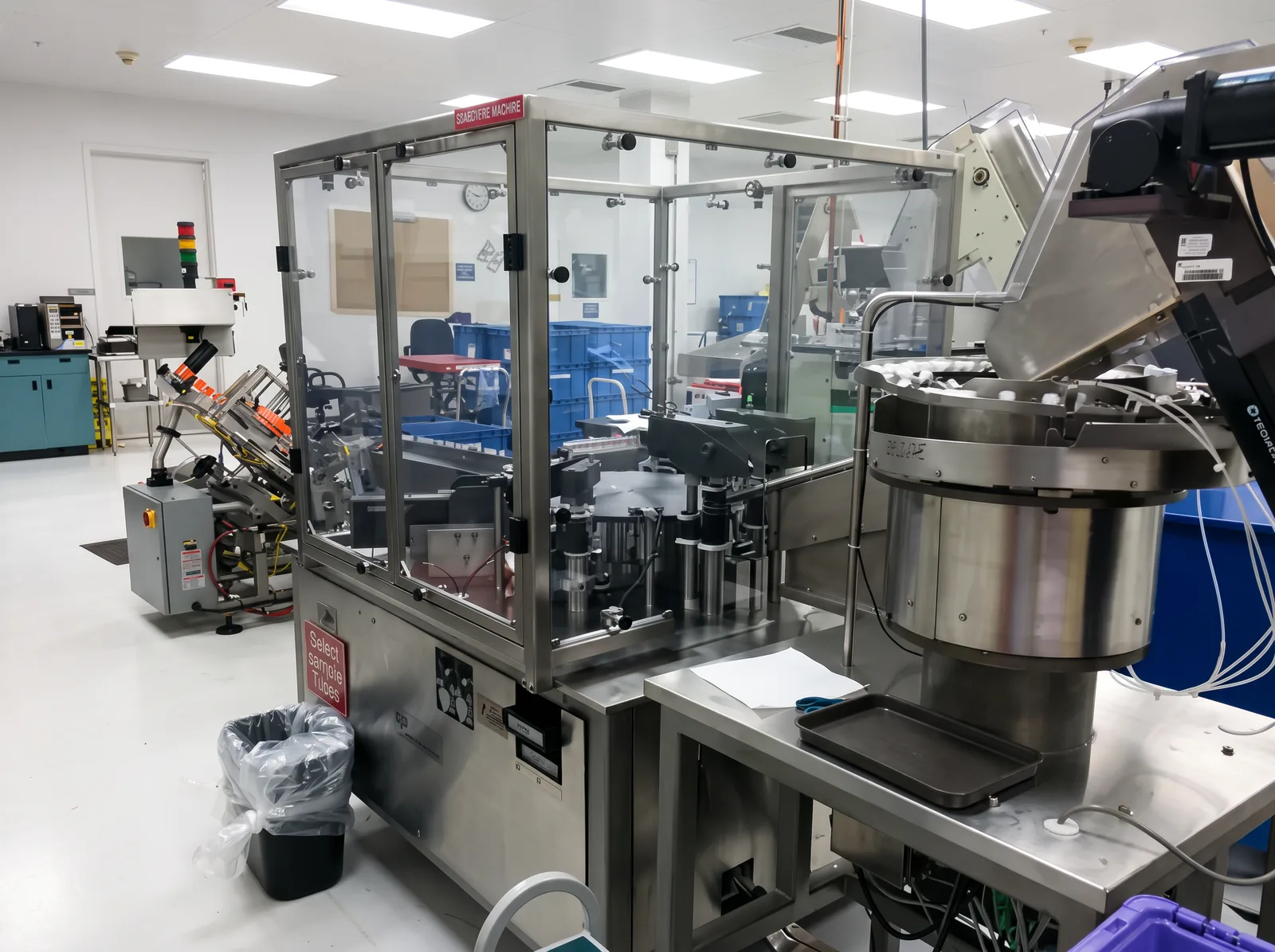
The problem — foamy reagent, odd-shaped bottle, 1-liter fill in under 60 minutes — didn’t have a catalog answer. Standard fill equipment vendors would have demurred or required extensive modification. What the project required was an engineer who understood fill process dynamics well enough to design a custom nozzle and process from the beginning.
The fill units worked better than specified. Filling just over a liter of foamy reagent in under the required 60 minutes. That outcome came from designing the fill process correctly at the start, not from adjusting a standard machine to fit an unusual requirement.
For most CDMOs, the lesson from that project isn’t “you can always do it in under two months.” The lesson is that the path to a tight timeline is problem-first engineering, starting with a clear understanding of what the equipment needs to do, before vendor selection begins.
Where the Timeline Risk Accumulates
Four things create qualification timeline risk faster than anything else at a CDMO.
The first is a late URS. A URS that isn’t finalized before vendor selection forces the vendor to build to an incomplete specification. Every change after that is a change order. Every change order adds weeks and cost. CDMOs that have been through a bad change order experience know this. CDMOs on their first major equipment procurement sometimes find out mid-project.
The second is a FAT that isn’t treated as qualification. A FAT conducted as a delivery inspection rather than a qualification step defers problems from the vendor’s floor to your floor. The equipment that would have failed FAT at the vendor’s facility now fails IQ on your site. The vendor has already been paid and moved to the next project. Resolution is slower and more expensive.
The third is protocol development after delivery. IQ, OQ, and PQ protocols should be written before the equipment arrives. When they’re written after, the engineer who writes them is working from a machine that’s already installed — sometimes with pressure from operations to start production. That pressure doesn’t improve documentation quality.
The fourth is multi-client qualification scope that wasn’t planned in the contract. A CDMO that signs a second client onto a line during the first client’s qualification cycle now has a scope change that doesn’t fit any protocol. The first PQ was written for Client A. Client B has different reagent parameters. That’s a change control event, a revised PQ scope, and potentially a delayed production release for both clients.
A Realistic Timeline for CDMO Automation Procurement
These ranges assume standard commercial equipment, not custom design-and-build.
| Stage | Realistic range |
|---|---|
| URS development | 2–4 weeks |
| Vendor RFQ and quote evaluation | 2–3 weeks |
| Vendor selection and PO | 1–2 weeks |
| Equipment build / lead time | 10–20 weeks (category-dependent) |
| FAT at vendor facility | 2–5 days |
| Freight and installation | 1–3 weeks |
| IQ/OQ execution | 2–4 weeks |
| PQ (single product) | 2–4 weeks |
| QA review and documentation close | 2–4 weeks |
| Total (fast end) | ~22 weeks |
| Total (realistic mid-range) | ~30 weeks |
That table is not pessimism. It’s what the process takes when each step is done correctly. CDMOs that sign contracts with 20-week production start dates and standard equipment procurement are compressing something — usually documentation.
The fastest path through this schedule is a URS that was written well, a FAT protocol that was written before the FAT date, qualification protocols that were written before equipment delivery, and a QA review that doesn’t find gaps because the documentation was built to support it.
Common Questions from CDMO Operations Teams
We signed a client contract with a 16-week production start. Is that achievable?
It depends on what the equipment situation looks like right now. If procurement hasn’t started and you need commercial fill equipment, 16 weeks from today to qualified production is almost certainly not achievable without cutting corners on documentation. If you’re working with custom design-and-build and the problem is well-defined, the timeline can compress — but that requires immediate scope clarity, not a standard procurement process. The honest answer is to assess what’s actually achievable, communicate that to the client early, and figure out an interim plan rather than discovering the gap at week 14.
How much of the CDMO automation qualification timeline is actual engineering versus documentation?
More than most operations teams expect. The physical installation of equipment is often the fastest part of the process. The documentation — URS, protocols, executed records, deviation handling, change control, QA review — takes at least as long and often longer than the engineering work. That ratio surprises CDMO teams that have managed equipment installations but haven’t run a full GAMP qualification cycle before.
Can a CDMO start producing for a client before all qualification documentation is complete?
Under FDA cGMP requirements, the equipment used in production of regulated products needs to be qualified before that production counts as GMP-compliant. Running product before qualification documentation is complete is possible, but that production typically can’t be released for commercial use without the documentation supporting it. What sometimes happens is a CDMO runs development batches under a different protocol while qualification is ongoing — but that requires a clear protocol distinguishing development activity from commercial production. If a client’s contract specifies GMP production by a specific date, the qualification documentation needs to be complete by that date.
How does MEPSCo’s 8-step process fit into a CDMO’s existing project timeline?
The 8-step GAMP process maps directly onto the equipment procurement lifecycle — from CRD and URS through FAT/SAT and IQ/OQ/PQ to SOPs and sustaining handoff. On a CDMO project, Reza embeds with the operations team and manages the procurement and qualification work against the client’s production start date. The value isn’t the process itself — it’s that the process runs correctly the first time, without the documentation rework that adds weeks to a tight qualification cycle.
What happens to the qualification timeline if the reagent product is non-standard — foamy, viscous, or temperature-sensitive?
Non-standard reagent characteristics affect PQ scope and documentation more than they affect equipment delivery time. The PQ has to demonstrate acceptable fill performance under the actual product conditions — which means non-standard behavior needs to be characterized in the URS and tested in OQ before PQ begins. If this characterization wasn’t done upfront, it adds an engineering study step between OQ and PQ. For really unusual fill challenges — very foamy reagents, for example — the fill process itself may need to be designed before vendor selection begins, which affects the whole procurement sequence.
The Part of the Timeline That’s Entirely in Your Control
Most of the factors that push a CDMO qualification timeline past the client’s contract date are engineering and documentation decisions made before the equipment ships. Some are made before the client contract is signed.
Knowing what a realistic timeline looks like — including the documentation stages that often get underestimated — is what makes an accurate commitment possible. And an accurate commitment is what protects the client relationship when execution starts.
The Bottom Line
If your CDMO is planning a new equipment procurement or working through a qualification cycle with a tight client deadline, the timeline gets built at the URS — before vendor selection — not at installation.
MEPSCo GAMP’s CDMO automation procurement process starts at the URS, which is where realistic timelines get built. Schedule a project review to scope the schedule against your client’s production date.