
IQ/OQ/PQ for Medical Device Manufacturers: What Audit-Ready Actually Means
IQ/OQ/PQ documentation can be technically complete and still fail an FDA inspection. The difference isn’t missing documents — it’s whether your acceptance criteria were defined before testing started, whether your trace matrix connects every requirement to an executed test, and whether the documentation was built to answer inspector questions or just to close out the project.
- Documentation can be complete and still fail inspection. Audit-ready means an investigator can trace any test result to a pre-defined acceptance criterion, and that criterion back to a user requirement in the URS.
- The five failures investigators find repeatedly: acceptance criteria defined after testing, OQ run only at nominal conditions, PQ run by engineers instead of production operators, a trace matrix that doesn’t connect to the URS, and retroactive documentation.
- IVD equipment — foamy reagents, magnetic-particle suspensions, lyophilized beads, non-standard containers — needs qualification parameters that pharma-boilerplate templates don’t cover.
- The single best predictor of audit-ready IQ/OQ/PQ is whether the URS was written and approved before the equipment was procured.
Most IQ/OQ/PQ documentation passes internal review and fails FDA inspection. Not because someone skipped a document. Because the documentation was assembled rather than engineered.
There’s a real difference between those two things, and it shows up fast when an investigator walks in.
This post covers what actually separates audit-ready IQ/OQ/PQ from documentation that’s technically complete but inspection-vulnerable. It’s written from the equipment engineer’s side of the table — the side that has to build this documentation, defend it, and then hand it off to a QA team that wasn’t in the room when it was written.
If you manufacture consumable diagnostics, IVD reagent kits, or lab-use components, there’s additional context here that pharmaceutical-focused guides routinely skip. The equipment challenges are different. The reagent behavior is different. The qualification parameters that matter are different. Generic boilerplate usually doesn’t cover any of that.
For a broader look at how IQ/OQ/PQ fits into the full equipment procurement lifecycle, see our guide to IVD manufacturer automation procurement.
What IQ, OQ, and PQ Actually Are (And Why the Sequence Is Non-Negotiable)
IQ, OQ, and PQ stand for Installation Qualification, Operational Qualification, and Performance Qualification. They form a sequential framework — each phase builds on the previous, and you can’t run them out of order without compromising the entire validation.
Installation Qualification (IQ) establishes that the equipment was delivered and installed correctly. Utilities confirmed. Calibration certificates current. Components matching specifications. Damage assessed at delivery. Every installation detail documented at the time it happened, not reconstructed afterward.
Operational Qualification (OQ) establishes that the equipment functions within its defined operating range — including worst-case conditions. Functional testing at nominal settings isn’t enough. OQ has to challenge the equipment at the edges of its operating range to establish where the limits actually are. This is where acceptance criteria matter most, and where the most common documentation failures happen.
Performance Qualification (PQ) demonstrates that the equipment produces acceptable output consistently, under real production conditions, with production personnel and production materials. Not engineers running the equipment in ideal conditions. Actual operators. Actual reagents. Actual batch sizes.
Skip IQ, and you have no confirmed baseline. Skip OQ worst-case testing, and your operating range is undefined. Run PQ with non-production conditions, and the qualification doesn’t reflect what the line actually does.
The sequence isn’t a regulatory preference. It’s load-bearing.
The Real Difference Between Complete and Audit-Ready
Here’s the honest version of why IQ/OQ/PQ documentation fails inspection even when it technically exists.
Complete means all three protocols were written, executed, and closed with a report. Signed by quality. Filed.
Audit-ready means something more specific. It means an FDA investigator can pull any test result, trace it to an acceptance criterion, trace that criterion to a user requirement, and verify that the criterion was defined before testing started — not after the results came in.
That chain — test result to acceptance criterion to user requirement — is the trace matrix. And the trace matrix is only defensible if the URS it connects to was solid before the equipment was ordered.
This is the part most documentation guides don’t get to. They describe IQ/OQ/PQ as a qualification exercise. It’s actually a verification exercise. You’re verifying that the equipment does what the URS said it needed to do. If the URS was vague, incomplete, or written after the equipment arrived, the entire qualification is built on an unstable foundation.
According to documentation guidance from elexes.com’s IQ/OQ/PQ compliance guide, protocols written or modified after testing are data integrity violations under 21 CFR Part 11. FDA investigators have seen every version of retroactive documentation. The approval date compared to the test execution date is one of the first things they check.
The URS comes before everything else. Before vendor quotes. Before the purchase order. Before the FAT. If you write the URS after you already know what the equipment does, you’re not specifying requirements — you’re describing a machine you already bought.
The Five Documentation Failures FDA Investigators Find
These patterns show up repeatedly across inspection reports for diagnostic and IVD equipment manufacturers. They’re predictable because they come from the same upstream problem: qualification documentation that was assembled to close a project rather than built to answer regulatory questions.
1. Acceptance criteria that were defined after testing was complete. The protocol says “equipment shall operate within specifications.” The specifications are referenced in another document. That document wasn’t approved until after the test results were in. An investigator following this thread will notice the dates. The acceptance criterion has to be pre-defined, specific, and measurable. “Equipment shall operate within specifications” isn’t a criterion — it’s a placeholder.
2. OQ that only tested at nominal conditions. The purpose of operational qualification is to establish operating limits by testing at the edges of the operating range. If OQ was run only at nominal settings — the conditions the vendor recommended — the qualified range is essentially undefined. Worst-case testing isn’t optional. It’s the mechanism that establishes what the limits actually are rather than what the vendor estimated them to be.
3. PQ conducted by engineers instead of production operators. PQ is supposed to demonstrate that the equipment performs under real production conditions. When engineers run the PQ, the results reflect what trained specialists can do with the equipment, not what production operators will do with it every day. FDA investigators ask who conducted PQ testing. “The validation team” is not the right answer for a phase that’s explicitly about production conditions.
4. Trace matrix that doesn’t connect to the URS. The trace matrix is what links every IQ/OQ/PQ test to a documented requirement. If the trace matrix only connects tests to protocol sections — not to user requirements in the URS — it’s an internal cross-reference document, not a compliance document. The chain has to extend to the URS. Without that, there’s no defensible answer to “what requirement were you validating against?”
5. Retroactive documentation patterns. Identical handwriting across tests that were supposedly conducted on different dates. Data recorded on worksheets and then transcribed rather than recorded in real time. Protocol approval dates that come after execution dates. These are data integrity flags. Under ALCOA standards — Attributable, Legible, Contemporaneous, Original, Accurate — contemporaneous recording is non-negotiable. SimplerQMS’s IQ/OQ/PQ reference notes that missing traceability records and insufficient deviation documentation are the most common patterns creating audit vulnerability.
Why IVD Equipment Creates Specific Qualification Challenges
Generic IQ/OQ/PQ guidance was largely written with pharmaceutical manufacturing in mind. Filling a vial with a liquid API isn’t the same as filling a diagnostic cartridge with a foamy reagent, a magnetic particle suspension, or a lyophilized bead — and the qualification parameters that matter aren’t the same either.
A few specific challenges that show up in IVD and diagnostic manufacturing that standard templates often don’t account for:
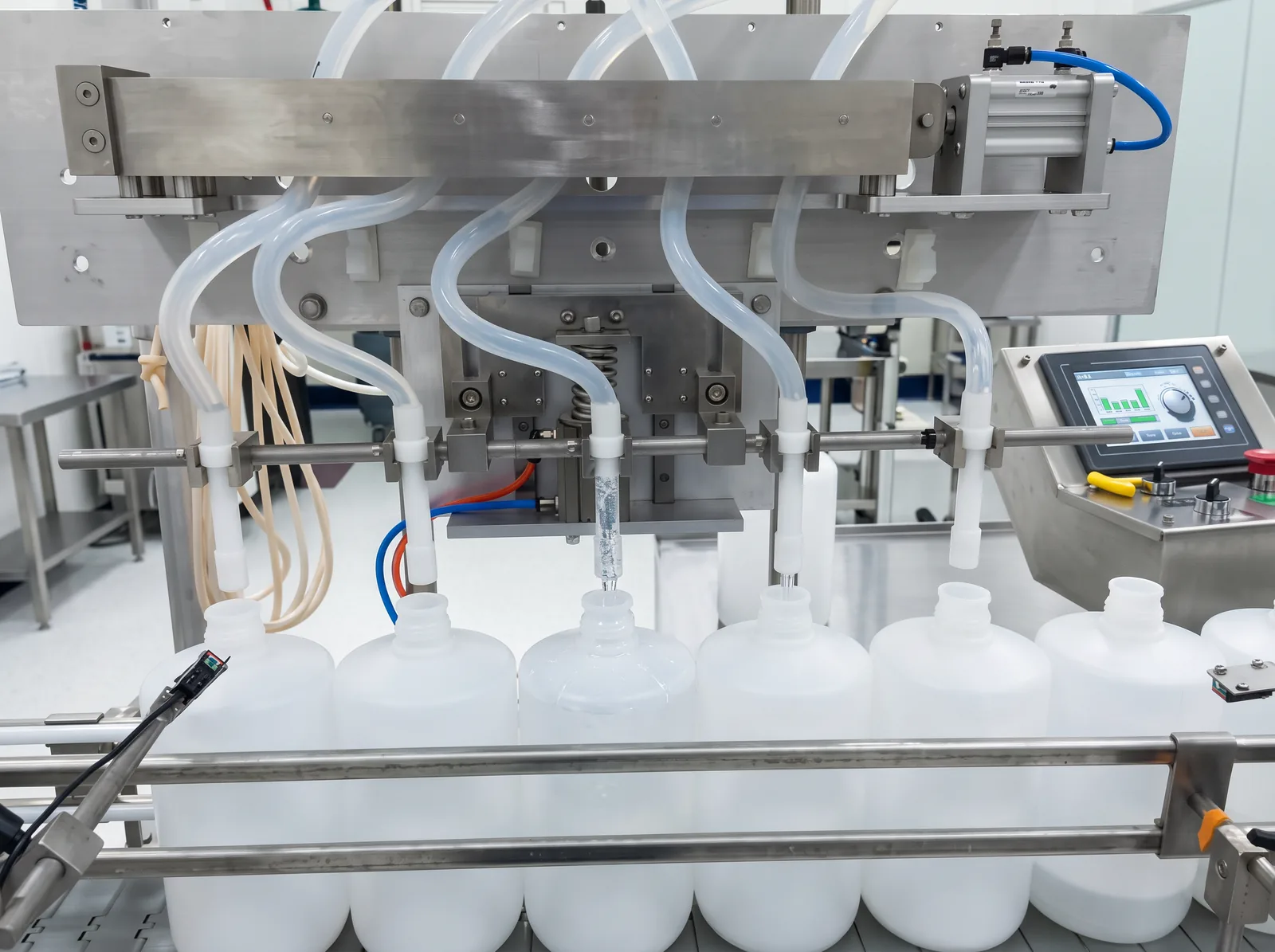
Foamy reagents. Reagents that foam during filling create fill volume variability that standard fill equipment can’t handle. The OQ for a foamy reagent fill process has to test at conditions that account for foam formation — the appropriate nozzle design, dwell time, and fill sequence parameters. If OQ was run with a reagent that doesn’t foam, the operating range that was qualified doesn’t reflect the actual production material. That’s a problem at audit.
Magnetic particle suspensions. These settle. The PQ for equipment handling magnetic particle suspensions needs to account for settling behavior over the course of a production run, not just initial mixing. If PQ was run with freshly prepared suspension and the production process involves suspension that’s been sitting for two hours, the qualified conditions don’t match production conditions.
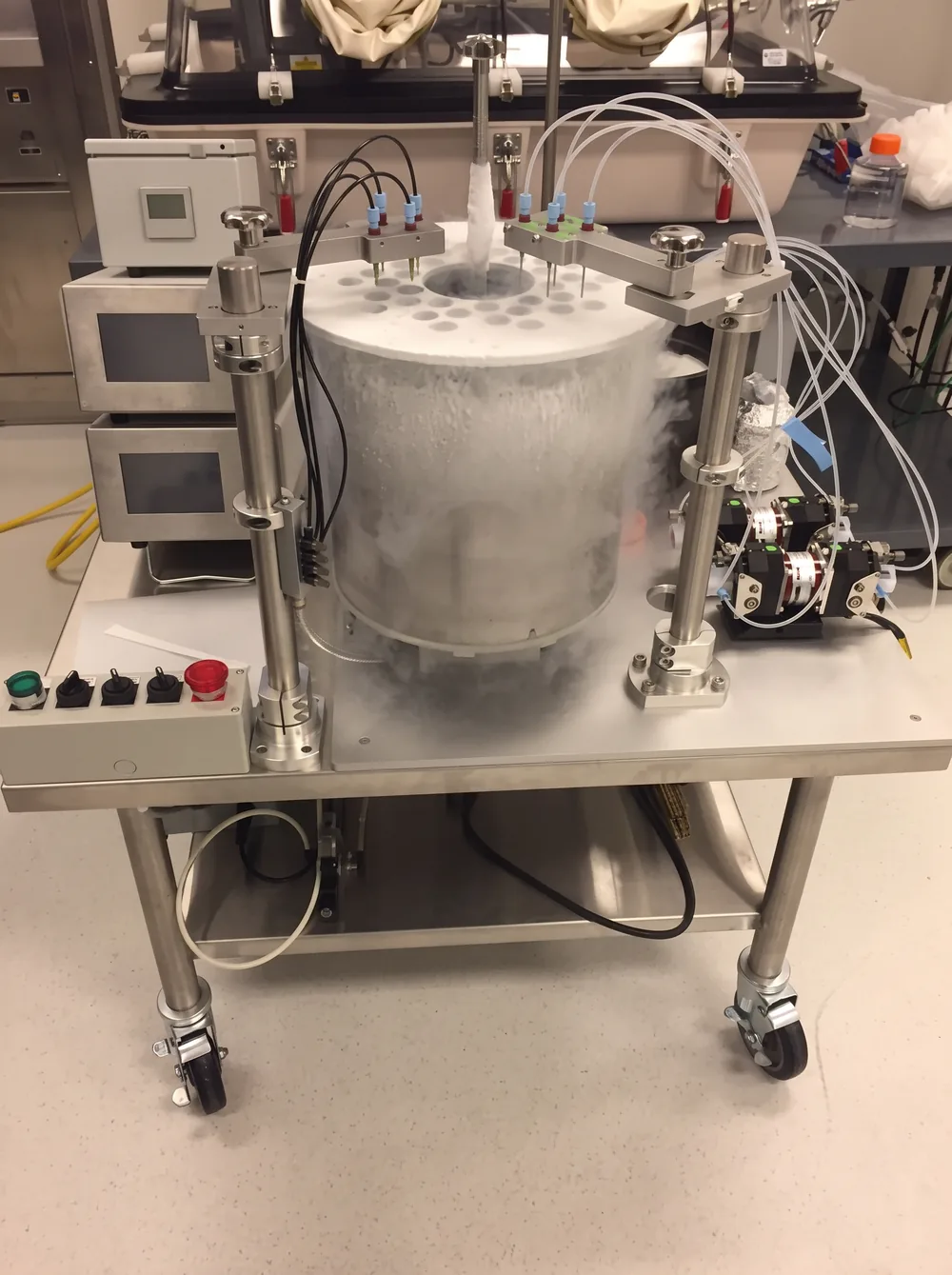
Lyophilized bead manufacturing. Lyophilization process qualification involves parameters — shelf temperature ramps, chamber pressure profiles, final moisture content — that require OQ testing across the full range of values, not just a single point. Cycle development that establishes those ranges belongs in OQ. Running PQ on a cycle that was defined during PQ is backwards.
Non-standard container geometries. Diagnostic cartridges, unusual bottle shapes, multi-well formats. Off-the-shelf filling equipment often doesn’t handle these reliably. The IQ for equipment that’s been modified or customized to handle a non-standard container has to document that the modification was installed correctly. If the customization wasn’t in the original equipment specification, it should be captured in a change control process, not just in the IQ report.
None of this is exotic. It’s the normal operational reality for IVD manufacturers, and it’s what makes pharma-boilerplate IQ/OQ/PQ documentation insufficient for this industry. The acceptance criteria have to reflect the actual product and the actual process — not generic pharmaceutical benchmarks.
What a URS-Grounded IQ/OQ/PQ Looks Like
The single most reliable predictor of audit-ready IQ/OQ/PQ documentation is whether the URS was written before the equipment was procured.
A solid URS defines every measurable performance requirement — fill volume tolerance, cycle time, throughput rate, operating temperature range, cleaning protocol compatibility, software interface requirements, alarm functions, safety features — before a purchase order is issued. That document becomes the requirement set the trace matrix connects to. Every acceptance criterion in every protocol ties back to a line in the URS.
When that chain exists, an investigator can follow it. When it doesn’t, the qualification documents are a collection of tests with no documented requirement they were designed to verify.
The MEPSCo GAMP process starts with the URS because the rest of the qualification is only as defensible as the requirements document it references. Across 96+ projects in IVD and diagnostic manufacturing, the consistent pattern is: companies that skip the URS or write it after equipment arrives spend disproportionate time on qualification problems that wouldn’t exist if the requirements had been defined earlier. Sometimes they spend it retrofitting validation to equipment that wasn’t built to spec. Sometimes it’s change orders. Sometimes it’s a 483 observation that raises questions the qualification record can’t answer.
The 22-document GAMP package covers the full lifecycle — from CRD through sustaining activity support — specifically so that IQ/OQ/PQ documentation has the upstream foundation it needs to be defensible. Learn more about how the GAMP documentation process for medical device manufacturers works in practice.
The Sequence Problem No One Talks About
There’s a specific failure pattern that doesn’t appear on published lists but comes up regularly in practice. Call it the sequence compression problem.
It happens when IQ, OQ, and PQ are treated as paperwork phases rather than sequential qualification activities. The equipment arrives, someone writes protocols while the equipment is being installed, testing runs happen in parallel across all three phases, and the documentation gets sorted into IQ, OQ, and PQ buckets after the fact.
The results look fine. Everything passed. But the sequential logic is missing. OQ acceptance criteria weren’t defined before OQ ran. PQ started before OQ was closed. The protocol approval dates suggest the phases ran in sequence, but the test execution records tell a different story.
This isn’t just a documentation problem. IQ establishes the baseline that OQ builds on. If IQ was running at the same time as OQ, you don’t know what state the equipment was in when OQ data was collected. The sequential structure exists because each phase depends on the previous one having been completed and closed.
Under FDA’s Compliance Program 7382.850 for medical device inspections, investigators review whether process validation was completed before production began. “Completed” means all three phases, in sequence, closed out before production materials were manufactured for distribution. Parallel execution doesn’t satisfy that standard.
What Good IQ/OQ/PQ Documentation Looks Like Before an Audit
The standard to aim for isn’t “passes a document review.” It’s “an investigator who wasn’t there when this equipment was qualified can follow the documentation and understand exactly what was tested, why, and against what requirement.”
That means:
- Protocols approved before testing started, not after. Approval dates should precede execution dates on every protocol.
- Acceptance criteria that are specific, measurable, and explicitly stated in the protocol — not referenced to another document that may have changed since qualification.
- A trace matrix that connects every executed test to a specific line in the URS.
- OQ worst-case data documented and analyzed — not just nominal-condition tests.
- PQ executed under production conditions: production personnel, production materials, production batch sizes.
- Deviations investigated and closed, with root cause documented. Deviations that were noted, dismissed without investigation, and filed are an audit risk.
- SOP versions current — the SOPs in use on the production floor should match the SOPs referenced in the qualification reports.
That last one causes more 483 observations than most manufacturers expect. The qualification documented what the process looked like at the time of qualification. If the SOPs have been revised since then — even minor revisions — and the equipment wasn’t requalified, the documentation reflects a process that no longer exists.
Under the February 2026 QMSR framework, change control for equipment and process changes is an explicit inspection area. The question isn’t whether the equipment was qualified. It’s whether the qualification is still current.
Getting the Documentation Right From the Start
The reason IQ/OQ/PQ documentation fails inspection isn’t usually the qualification phase. It’s everything that happened before it.
A URS written after the equipment arrived can’t be the foundation for a defensible trace matrix. OQ acceptance criteria defined after results are in aren’t pre-defined criteria. PQ run by engineers under ideal conditions doesn’t demonstrate production performance.
The documentation problems that surface at inspection were created during procurement, during URS development, or during the protocol drafting stage — not during the inspection itself. By the time an investigator is asking questions, the window to fix the structural issues has closed.
MEPSCo works exclusively on the manufacturer’s side of the equipment procurement process. That means the URS is built before vendor quotes are solicited. The trace matrix structure is defined before FAT. IQ/OQ/PQ protocols reference requirement numbers in the URS, not generic acceptance language. The documentation is built to answer inspector questions because it was designed from the start with that purpose in mind.
If you’re about to procure equipment and want to understand what audit-ready looks like before the process starts, or if you’ve already qualified equipment and want a second opinion on where the documentation stands, contact MEPSCo to talk through your specific situation.
Questions Manufacturers Get Wrong Before the Audit
We have a full set of IQ/OQ/PQ reports. Is that enough?
A complete set of reports isn’t the same as audit-ready documentation. Investigators look at whether protocols were approved before testing, whether acceptance criteria were pre-defined and specific, whether the trace matrix connects to the URS, and whether SOPs still match what was qualified. Reports that close the project aren’t the same as documentation that answers those questions.
Our equipment vendor supplied the IQ/OQ/PQ documentation as part of the purchase. Can we use it?
Vendor-supplied documentation is a starting point, not a finished qualification package. The vendor can provide installation procedures, calibration specifications, and functional test templates. They can’t write your URS, because your requirements are yours. They can’t complete your trace matrix, because it connects to your requirements document. The qualification package has to reflect your installation environment, your operating conditions, and your production process — not the vendor’s generic templates.
Our acceptance criteria say the equipment “shall perform within specifications.” Is that acceptable?
No. “Within specifications” is a reference to another document, not an acceptance criterion. The criterion has to be stated explicitly in the protocol — the specific value, the specific tolerance, the specific measurement method. If an investigator has to follow a chain of references to determine what “within specifications” means, that’s a documentation gap.
We haven’t had an FDA inspection in three years. Do we still need to worry about requalification?
Inspection frequency and compliance status aren’t the same thing. QMSR-era enforcement has increased; 47 medical device warning letters were issued in FY2024 compared to 24 in FY2023, per Complizen’s 2025 device enforcement analysis. More relevantly: if equipment has been modified, if operating conditions have changed, or if SOPs have been revised since the original qualification, the documentation gap exists regardless of when the last inspection happened. The question isn’t whether you’ve been inspected. It’s whether your current documentation reflects your current process.
What’s the riskiest documentation gap to have when an investigator arrives?
No trace matrix connecting qualification tests to user requirements. Without it, there’s no documented answer to the question “what requirement were you validating against?” Every other documentation gap creates a specific observation. Missing traceability calls the entire qualification into question.
The Bottom Line
IQ/OQ/PQ documentation is audit-ready when an investigator can trace any result to a pre-defined acceptance criterion and back to a URS requirement. That chain is built before the equipment is ordered — not reconstructed before an inspection.
The most reliable predictor of audit-ready qualification is a URS that was written and approved before procurement — so every acceptance criterion and every test traces back to a documented requirement.
Reza Bashar at MEPSCo GAMP works with IVD and medical device manufacturers on equipment qualification and audit-ready IQ/OQ/PQ documentation. If you want to know whether your documentation would hold up to a QMSR-level inspection, reach out directly.