IVD Manufacturer Automation Procurement: Equipment Engineering for In Vitro Diagnostic Companies
IVD manufacturers hit the automation wall at a specific production volume — usually somewhere between 5,000 and 20,000 units per shift, when manual assembly stops being viable. The problem isn’t finding equipment. It’s procuring the right equipment, getting it qualified under FDA’s quality system regulation, and doing it without the internal engineering capacity most growing IVD companies don’t have yet.
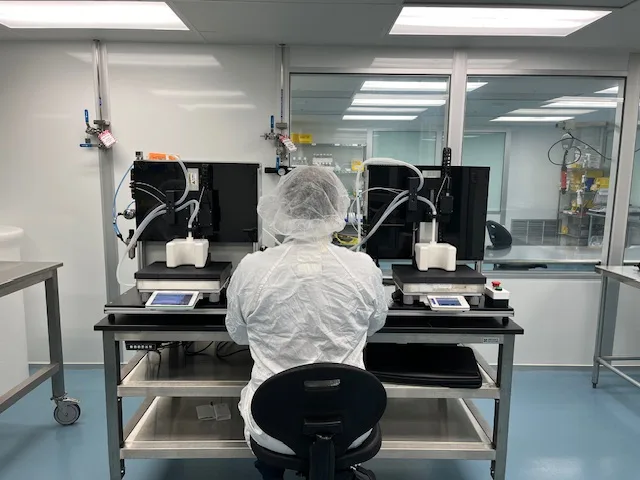
Most IVD manufacturers don’t start with automation. They start with a manual assembly process in the lab, which works fine at R&D volumes. The product is validated. The process is understood. Volume grows. At some point, manual assembly can’t keep up — and the floor space, labor cost, and unit quality variability make it unsustainable.
That’s when someone in operations brings up automation. And that’s when the company realizes they don’t have anyone on staff who has actually run an automation procurement project in a regulated manufacturing environment.
This is the IVD automation gap. Not a technology problem. Not a product design problem. A manufacturing engineering problem, at exactly the moment when the IVD product is proving itself commercially and scaling is the priority.
Why IVD Automation Procurement Is Different From General Manufacturing
In a non-regulated manufacturing environment, buying a piece of production equipment is a procurement exercise. Define what you need, get quotes, pick a vendor, take delivery, start using it.
IVD manufacturers regulated under 21 CFR Part 820 — FDA’s Quality System Regulation — can’t do that. Every piece of production equipment that touches or directly produces a product needs to be qualified. That means documented evidence that the equipment was installed correctly (IQ), operates within its defined parameters (OQ), and consistently produces output that meets specification (PQ). That IQ/OQ/PQ documentation is what FDA inspectors check. It’s what internal QA signs off on before production release.
The equipment qualification process doesn’t happen automatically when the machine arrives. It has to be designed, documented, and executed — usually by an engineer with the right mix of automation and GAMP expertise.
That combination is not common. Most automation engineers have never written a URS or run an IQ/OQ/PQ. Most validation engineers have never specified commercial automation equipment. The person who can do both — and has done it across multiple IVD product types — is the gap most growing IVD manufacturers eventually discover.
The Scale-Up Moment Most IVD Companies Aren’t Ready For
The transition from manual production to automated production in an IVD company follows a recognizable pattern. R&D creates the product. The process transfer group takes it from lab-scale to small-volume manufacturing. That initial manufacturing is manual — manual fill, manual assembly, manual inspection. At several thousand units per shift, it works. At ten thousand units per shift, the problems compound: inconsistent output, operator fatigue, floor space constraints, labor cost at volumes that don’t support manual economics.
At that inflection point, the company needs automation. But the skills that got the product to commercial-scale manufacturing don’t include capital equipment procurement in a regulated environment. Process engineers know the product. They know the regulatory requirements. They don’t know how to write a URS, evaluate automation vendors using a methodology like KT analysis, manage FAT at a vendor facility, or build the 22-document GAMP package that QA needs before releasing the line to production.
So the IVD manufacturer either hires someone — a search that takes 49–62 days on average even in a good market (NACE, 2023) — or they figure it out internally, which means the first equipment project becomes a training exercise for whoever gets assigned to it. Neither path is fast. Neither is low-risk.
What IVD Automation Procurement Actually Requires
The GAMP documentation for a piece of IVD production equipment isn’t a single document. It’s 22 documents, built sequentially, each one dependent on the one before it.
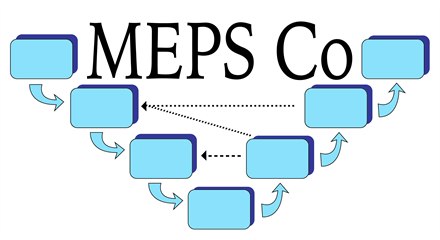
The process starts with a CRD — a Customer Requirements Document that captures what the manufacturer actually needs, not what they assume they need. The CRD feeds a budgetary URS, which produces comparable vendor quotes. The final URS is the requirements document the vendor builds against. From that, FRS and FDS documents define design and functional requirements, and the trace matrix connects every requirement to a design element.
Then FAT at the vendor facility, SAT at the manufacturer’s facility, IQ/OQ/PQ execution and documentation, engineering studies for any non-standard process parameters, and SOPs that hand the qualified equipment off to the internal team.
That sequence, when it’s done correctly, produces a defensible documentation package that holds up under FDA inspection and internal QA review. When any step is skipped or abbreviated, the gaps show up — usually when QA is reviewing the package before production release, or when an FDA inspector asks to see the IQ records.
For IVD manufacturers with non-standard production processes — foamy reagents, magnetic particle suspensions, temperature-sensitive reagents, unconventional container formats — the GAMP documentation is harder. The equipment isn’t off-the-shelf. The process parameters aren’t established. The URS has to describe a process that may not have been commercially run at scale before. That requires engineering judgment that goes beyond template-filling.
The Reagent Fill Problem Is Specific to IVD
Most diagnostic consumables require liquid reagent filling. Most liquid reagent filling equipment is designed for benign liquids — water, mild solutions, standard pharmaceutical-type formulations.
Diagnostic reagents often aren’t benign from a filling process standpoint. They foam. They settle. They contain suspended particles that behave unpredictably under the pressure conditions of standard fill nozzles. They’re sensitive to air exposure, temperature excursions, or the shear forces of certain pump types.
Standard fill equipment vendors will take the order. They’ll build a machine. The machine may not perform acceptably with the actual reagent when it arrives at your facility for IQ — which is not the vendor’s problem at that point.
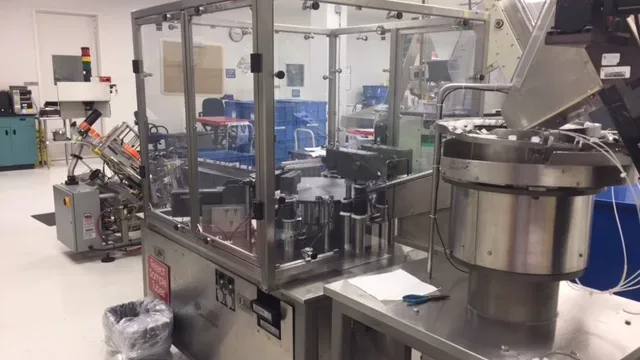
The engineering approach that prevents this is reagent characterization at the URS stage. Understanding how the specific reagent behaves under fill conditions, what container geometry the line will need to handle, what acceptable fill accuracy looks like at each fill volume, and what cleaning protocol keeps the line compliant between production runs — and capturing all of that in the URS before the vendor quote.
That requires someone who has seen foamy reagent fills go wrong. Who understands fluid dynamics in fill nozzle design. Who can spec a custom nozzle if the catalog solution won’t work.
Who Handles This at IVD Companies That Get It Right
The IVD manufacturers who get automation procurement right without a painful first-project learning curve almost always have one thing: an engineer on the project who has done this before. Not a general automation engineer. Not a validation engineer. Someone who sits at the intersection of manufacturing automation and GAMP documentation, with real project experience in IVD or closely adjacent product types.
That person is rare. The job market for senior automation engineers with IVD GAMP experience is thin — and the salary range for someone at that level runs $130K–$162K in base salary alone, with total first-year loaded cost approaching $230K–$280K, per KORE1’s 2026 Automation Engineer Salary Guide.
For an IVD company running one or two capital equipment projects per year, that’s a significant fixed cost for a function that peaks during procurement and qualification and then drops off substantially during production.
The fractional model addresses that directly. An experienced fractional automation engineer embeds with the IVD manufacturer’s team for the duration of the procurement and qualification project, brings the full GAMP process and the vendor relationships, and transfers the documentation and SOPs to the internal team when the project is complete. No ongoing salary overhead. No retention risk between projects. Senior-level execution on the project, junior-level sustaining cost after handoff.
MEPSCo GAMP’s 8-Step Process for IVD Manufacturers
Reza Bashar has run 96+ automation procurement and GAMP documentation projects across IVD manufacturers, consumable diagnostic companies, and CDMOs. The 8-step process was built from those projects — not from templates borrowed from other industries.
CRD and Customer Interviews
Surface what the line actually needs to do, including the IVD-specific process parameters that affect equipment spec.
Budgetary URS and Quotes
Give management a real number before committing, from comparable vendor quotes written against a budgetary URS.
Project Management
Milestone tracking and communication throughout the procurement and qualification timeline.
Final URS
The requirements document the vendor builds against — the document that prevents change orders.
FRS, FDS, and Trace Matrix
Every requirement traced to a design element, so nothing specified goes unverified.
FAT, SAT, and IQ/OQ/PQ
Qualification execution and documentation, from the vendor’s floor through your production line.
SOPs and Quality Docs
What the internal team needs to run and maintain the equipment, written for operators.
Sustaining Support
PM SOPs, junior engineer training, complete knowledge transfer so your team owns it.
The process works across standard IVD production equipment — fill lines, assembly machines, labeling systems — and non-standard challenges where off-the-shelf equipment won’t perform to spec.
A 30-minute review of your production setup, volume targets, and engineering resources produces a clear scope and a defensible budget to take to leadership. Looking at cost first? See what GAMP documentation actually costs.
Who This Is For
MEPSCo GAMP’s IVD automation procurement service is designed for companies that manufacture consumable diagnostic products — the reagents, test kits, assay components, and diagnostic consumables that end users go through regularly and reorder. This is for you if:
Running a contract manufacturing operation instead? See CDMO automation procurement.
And Who It Isn’t
This isn’t the right fit if:
You manufacture implantable devices or catheters.
Your product is a device as a component (used inside other manufacturers’ products) rather than a device-as-a-product sold to end users.
You have a senior automation GAMP engineer already embedded on the project and only need documentation support — though that’s a smaller engagement worth discussing.
80 PPM Assembly Across Multiple CMOs
Starting from an R&D process running 1,000 caps per shift on unproven penetrable caps, the engagement scaled to 5,000 caps per shift at 40 PPM, then to 80 PPM. The 80 PPM machines achieved 95% uptime running 24/7 — through vendor selection using KT analysis, proper GAMP documentation, and knowledge transfer to the internal engineering teams at each CMO facility.
Non-Standard Fill, Carlsbad CMO
Two custom fill units designed, built, and delivered in under 2 months for a foamy reagent in an odd-shaped bottle. A custom nozzle design exceeded the required fill spec — filling just over 1 liter in under 60 minutes. Standard vendors couldn’t meet the timeline or weren’t interested in a project this small. Read the case study.
Common Questions from IVD Manufacturing Teams
At what production volume does it make sense to automate IVD assembly or fill?
The inflection point varies by product, but the practical answer is when the manual process is consuming floor space or labor that can’t scale at the same rate as volume, or when manual output variability is showing up as yield loss or quality rejections. For most IVD consumable products, that happens somewhere between 5,000 and 20,000 units per shift — but the right threshold is the one where automation ROI is clear and the cost of not automating is measurable. Getting to that number requires a realistic look at current manual cost, projected volume growth, and the actual cost of an automation project including documentation.
Can we use a standard automation vendor to handle our IVD production equipment and have them write the GAMP documentation?
Vendors write their own equipment documentation — build records, test reports. That’s not the same as GAMP validation documentation. The FDA’s quality system regulation makes the manufacturer responsible for equipment qualification, not the vendor. A vendor who says they’ll handle your IQ/OQ/PQ is offering commissioning support at best. The documentation that FDA checks and QA signs off on needs to be authored and owned by someone working on the manufacturer’s behalf — not the vendor who built the machine.
Our IVD fill process involves a foamy reagent. Standard fill vendors say they can handle it. Should we trust that?
Ask them to demonstrate it with your specific reagent, at your container geometry, at your required fill volume and accuracy, before FAT. A vendor who says they can handle foamy reagents is making a claim. The time to find out whether that claim is accurate is at FAT, not after the equipment is installed on your floor. The URS should specify the fill performance criteria — fill accuracy, cycle time, acceptable foam behavior — so FAT has something to test against. If FAT fails those criteria, you know before the machine ships.
How long does an IVD automation procurement and qualification project typically take?
For standard commercial equipment, the realistic range from URS development through QA sign-off on the completed IQ/OQ/PQ package is 22–30 weeks, depending on equipment lead time and the complexity of the qualification scope. Projects with non-standard equipment or non-standard reagents can run longer. The fastest path through is a URS that was written correctly before vendor selection, protocols written before equipment delivery, and a documentation package built to pass QA review on the first submission rather than requiring rework.
What’s included in MEPSCo’s GAMP documentation package for IVD manufacturers?
The full GAMP documentation package spans 22 document types across the procurement lifecycle — from CRD and URS through FRS, FDS, trace matrix, FAT/SAT records, IQ/OQ/PQ protocols and executed records, engineering studies where needed, and SOPs for operation, maintenance, and PM. The package is designed to hold up under FDA inspection and internal QA review, and to be useful to the internal team taking over sustaining operations after handoff — not just a collection of documents that satisfies the form requirement.
Related Pages
CDMO Automation Procurement
Equipment engineering for contract diagnostic manufacturers.
READ MORE →Hire a Fractional Automation Engineer
Senior equipment procurement and GAMP, on a project basis.
READ MORE →GAMP Documentation Services
22 document types and the 8-step process.
READ MORE →What GAMP Documentation Costs
What a complete validation package runs on a capital project.
READ MORE →Fractional Automation Engineer
The full equipment procurement lifecycle, or any part of it.
READ MORE →Case Studies
Real builds, real timelines, real qualification outcomes.
READ MORE →Equipment Validation That Holds Up When It’s Checked
The MEPSCo GAMP model provides experienced automation GAMP engineering capacity on a project basis, with 96+ projects of process depth behind it, and a handoff designed to leave the internal team fully capable of sustaining what was built.
If your IVD company is planning a first automation project or replacing a line that didn’t qualify cleanly the first time, start with a Manufacturing Automation Assessment.
Schedule a Manufacturing Automation Assessment