
How to Make Your IQ/OQ/PQ Package Audit-Ready from Day One
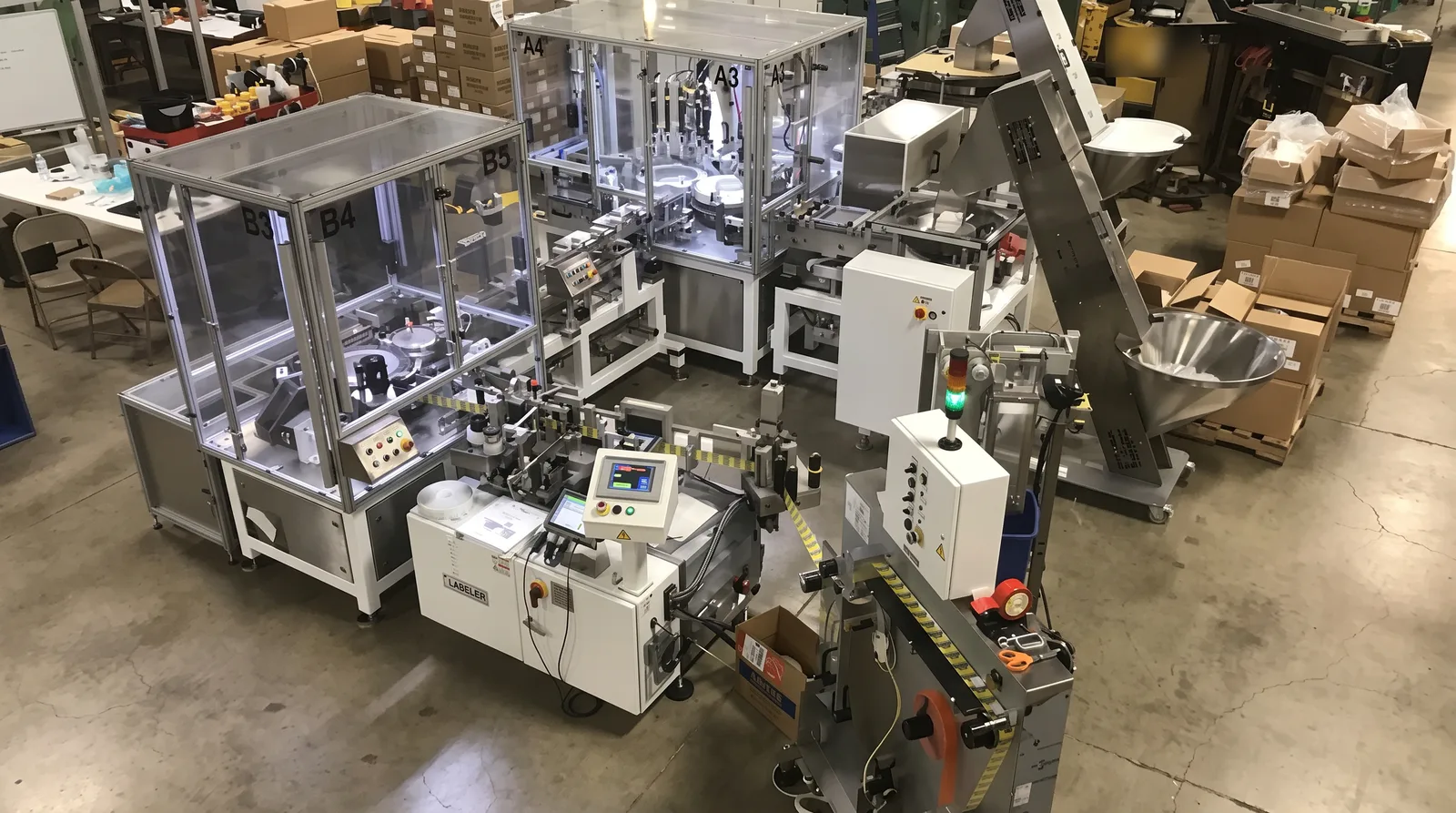
An audit-ready IQ/OQ/PQ package traces every qualification test back to the URS through a complete trace matrix, with clean documentation flowing from FAT/SAT into installation, operational, and performance qualification protocols. When that chain breaks, FDA finds it.
- An IQ/OQ/PQ package is only as strong as the URS behind it; every requirement needs exact specifications, tolerances, and quality checks.
- Start the trace matrix the day the URS is signed and keep it current through design, FAT/SAT, IQ, OQ, and PQ. Rebuilding it afterward costs several times the hours.
- A clean FAT/SAT feeds IQ and OQ directly, and PQ proves the process, not just the machine, under real production conditions.
- Documentation ownership belongs with an independent engineer, not the vendor that built and tested the equipment.
I’ve walked into facilities where the filling machine has been running for 6 months and nobody can show me a trace matrix. The equipment works fine. Product looks good. But the IQ/OQ/PQ package is a mess of disconnected protocols, orphaned test results, and specs that don’t trace back to anything the URS actually called for.
That’s not a validation problem. That’s a documentation architecture problem. And it started months earlier, during the URS development, when someone skipped the interview process or didn’t capture enough detail about the specs and quality checks.
In fiscal year 2025, FDA issued 14 warning letters specifically citing process validation deficiencies under the old 21 CFR 820.75. That number doesn’t even count the equipment qualification citations buried inside design control and CAPA findings. The pattern is consistent. Manufacturers build good machines, produce good product, and then can’t prove any of it because the documentation wasn’t structured for traceability from the start.
This post walks through exactly how to structure your IQ/OQ/PQ package so that when an auditor opens it, every protocol, every test result, and every acceptance criterion traces cleanly back to the URS. No scrambling. No reconstruction. No 3-week fire drills before your next inspection.
Why Do IQ/OQ/PQ Packages Fall Apart During Audits?
The root cause is almost never the qualification protocols themselves. It’s the gap between the URS and the validation documents. When the trace matrix isn’t developed throughout the whole process, requirements aren’t traced properly from URS through validation.
Here’s what that looks like in practice. A diagnostic manufacturer buys a cartridge filling machine. Engineering writes a URS. The automation vendor quotes the job, builds the equipment, ships it. The team runs FAT at the vendor site, does a quick SAT on installation, and then hands the whole thing to the validation group.
Problem is, nobody maintained the trace matrix during the project. So the validation team is reverse-engineering which URS requirements map to which IQ checks, which OQ tests, which PQ runs. They’re building the traceability documentation after the fact instead of maintaining it throughout.
That’s backwards. And it’s expensive.
I worked on a project where a retrofitted filling machine needed full IQ/OQ/PQ after the equipment was already running. The original validation documentation had been done piecemeal. No consistent trace matrix. No clear link between what the URS specified and what the protocols actually tested. The rework took 4 times longer than it would have if someone had built the documentation chain from day one.
What Makes a URS Strong Enough to Support Audit-Ready Qualification?
Everything starts from the URS. If the interview process wasn’t done properly and the URS wasn’t written with enough details about specs and quality checks, the entire downstream documentation chain wobbles.
I say this constantly because I’ve seen it play out the same way dozens of times. A URS that says "fill volume: 500 uL" without specifying the tolerance, the measurement method, the acceptable CV, and the environmental conditions gives the validation team nothing to build acceptance criteria against. They end up guessing. Or worse, they write acceptance criteria that don’t match what the machine was actually designed to do.
A URS that supports audit-ready qualification needs to include, at minimum:
- Exact specifications with tolerances for every critical process parameter. Not "fast fill speed" but "fill rate of 200 units per minute, plus or minus 5%."
- Quality checks and inspection points that tie to your product’s release criteria. What gets measured, how, and against what standard.
- Environmental requirements. Temperature ranges, humidity limits, cleanroom classification, vibration specs for the installation site.
- Material contact specifications for reagent-wetted surfaces, pump types, and seal materials. Especially for diagnostics, where you’re filling beads, viscous reagents, or light-sensitive materials into cartridges and tubes.
- Interface requirements. How the equipment talks to your MES, LIMS, or data collection systems. What data gets captured, stored, and reported.
The specificity matters because every line in the URS becomes a line in the trace matrix, which becomes a test in IQ, OQ, or PQ. Vague in, vague out.
How Does the Trace Matrix Hold the Whole Package Together?
The trace matrix is the single document that connects your URS requirements forward through design, FAT/SAT, and IQ/OQ/PQ. Without it, your qualification package is just a stack of individual documents. With it, an auditor can pick any requirement and follow it from inception to verified test result.
Think of it as the spine of the entire GAMP documentation set. Every URS requirement gets a unique ID. That ID appears in the design specification. It appears in the FAT protocol. It shows up in the SAT checklist. And it maps directly to a specific test in IQ, OQ, or PQ.
When I build a trace matrix for a project, the structure looks like this. Across the columns you have the URS requirement ID, the design spec reference, the FAT test reference, the SAT verification reference, and then the IQ, OQ, or PQ test reference. Down the rows, every single URS requirement has an entry. No gaps. No "see attachment." No "covered in general testing."
The critical rule: start it on the day the URS is signed. Not after FAT. Not during SAT. Not when the validation team picks up the project. Day one.
I’ve seen teams try to assemble a trace matrix retroactively. It takes weeks. They find requirements that were never tested. They find tests that don’t trace to any requirement. They find that the FAT covered something differently than the SAT, and neither matches the OQ. Retroactive traceability is reconstruction, not documentation. FDA knows the difference.
How Does a Clean FAT/SAT Feed Into IQ/OQ/PQ?
If the FAT and SAT were done correctly, your IQ/OQ/PQ becomes a structured separation of work that’s already been verified. Everything on that machine should have been tested at FAT/SAT to verify that the URS requirements were met and delivered to the manufacturing customer.
Here’s how the handoff should work.
IQ takes the installation-related items from the SAT and formalizes them. Did the equipment arrive per the packing list? Are utilities connected per the design specifications? Are the as-built drawings current? Is the software version correct? Calibration certificates current? These should all trace back to specific URS requirements about installation conditions.
OQ takes the operational testing from the FAT and re-verifies it at the installation site under actual production conditions. Operational parameters. Alarm setpoints. Interlock functions. Speed ranges. Fill volumes at the edges of the operating window. Every test has acceptance criteria that came from the URS, went through the design spec, got verified at FAT, and now gets confirmed at the installed location.
PQ is where the quality group steps in. This isn’t about the machine anymore. It’s about the product coming off the machine. Can the process handle the variability in your reagent, your molding, your raw materials? Can it produce consistent product across 3 consecutive runs with trained operators using production-grade inputs?
If you can’t show that you are in a state of control with your manufacturing process, that’s where you’re going to find problems when FDA shows up for their audit.
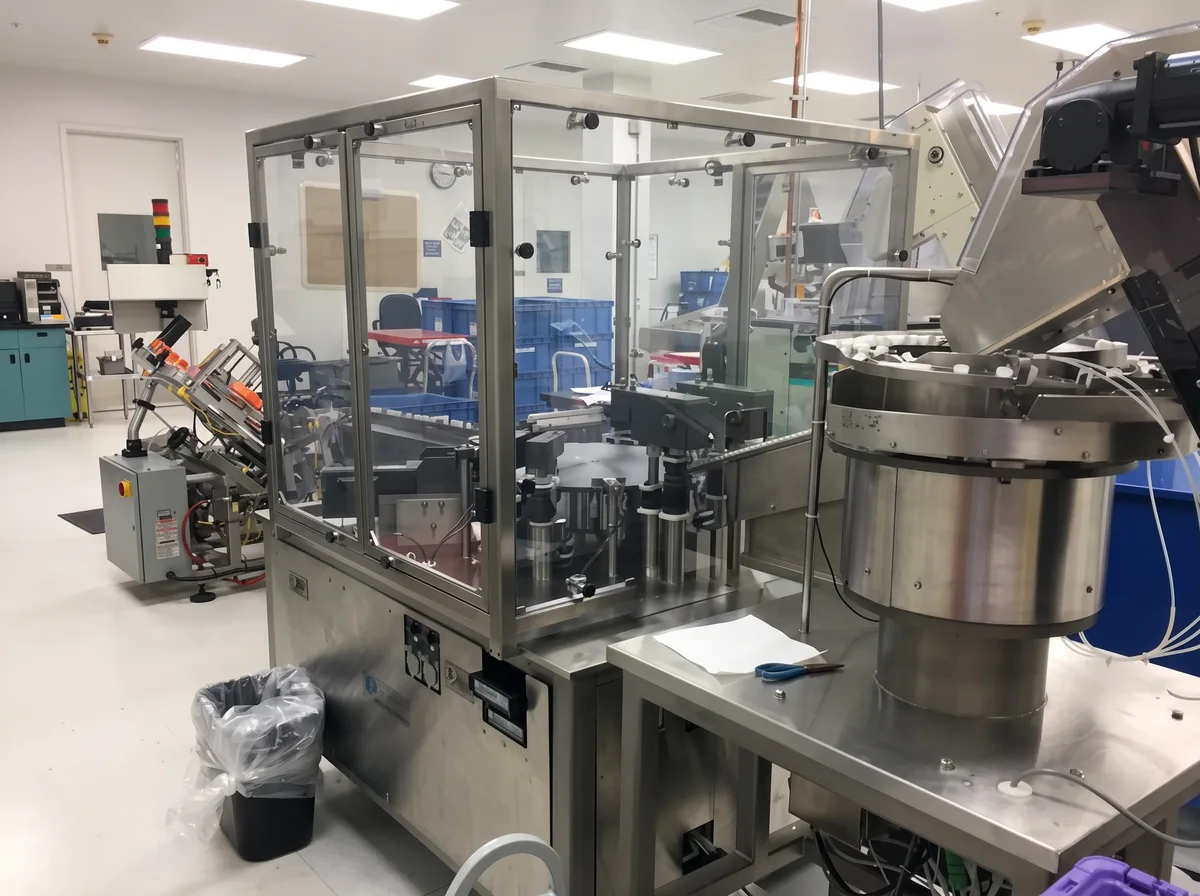
The handoff breaks down when FAT/SAT was incomplete. I worked on a DOD pandemic project where we ran a clean GAMP process from URS through validation. No change orders. Clean IQ/OQ/PQ. The entire documentation package took a fraction of the time because every requirement was tracked through the trace matrix from the beginning. Compare that to the retrofitted filling machine project, where reconstructing the documentation chain after the fact was the single biggest cost driver. Same qualification steps. Completely different effort levels.
What Should the Complete IQ/OQ/PQ Package Contain?
An audit-ready package isn’t just protocols and reports. It’s an organized documentation set that an auditor can navigate without asking you questions.
For IQ, your package needs the approved protocol, the completed execution records, the equipment packing list verification, utility connection verification (electrical, pneumatic, water, data), as-built drawing review, software version verification and configuration records, calibration certificates for all instruments, and the IQ summary report with any deviations documented and resolved.
For OQ, you need the approved protocol with acceptance criteria traceable to the URS, functional test results for every operational parameter, alarm and interlock verification records, operational range testing results (run at the limits, not just the nominal), cleaning verification if applicable, and the OQ summary report.
For PQ, include the approved protocol specifying the number of consecutive runs (typically 3, but your quality group determines this based on risk), process capability data (Cpk calculations where applicable), product test results against release specifications, operator training records showing who ran the equipment during PQ, environmental monitoring data from the production area during the runs, and the PQ summary report.
Across all three, the trace matrix ties everything together. And every deviation, no matter how minor, gets documented, investigated, and resolved before the summary report closes.
What Are the Audit Failures That Keep Showing Up?
The same 5 problems cause the bulk of audit findings in IQ/OQ/PQ documentation.
Acceptance criteria that don’t trace to the URS. The protocol says "verify fill volume is within specification" but doesn’t reference which specification, what the limits are, or where those limits originated. Auditors pull that thread and find nothing on the other end.
Missing or incomplete trace matrices. The matrix exists but hasn’t been updated since the design phase. Requirements added during FAT don’t appear. Changes made during SAT aren’t reflected. The PQ protocol references test numbers that don’t exist in the matrix.
Deviations documented but not investigated. The IQ found a calibration certificate that expired 2 weeks before installation. Someone noted it, got a new calibration done, and closed the deviation. But nobody assessed the impact on any measurements taken during that 2-week window. FDA will ask.
PQ runs that don’t reflect production conditions. The PQ was executed with one operator running the machine at 75% speed with hand-selected raw materials. Production runs 3 shifts with rotating operators at 100% speed using whatever materials came in from the supplier. That PQ doesn’t prove what the auditor needs it to prove.
In May 2025, FDA issued a warning letter to a diagnostic manufacturer whose capillary blood collection tube filling machines had never been validated, even though the machines had been running for roughly 30 years. The company’s own quality procedure required IQ, OQ, and PQ. They just never executed it. And their inspection software, when FDA tested it during the audit, accepted rods that were outside specification. That’s not an edge case. That’s what happens when the documentation process isn’t built into the equipment lifecycle from the start.
Who Needs to Own the IQ/OQ/PQ Documentation Process?
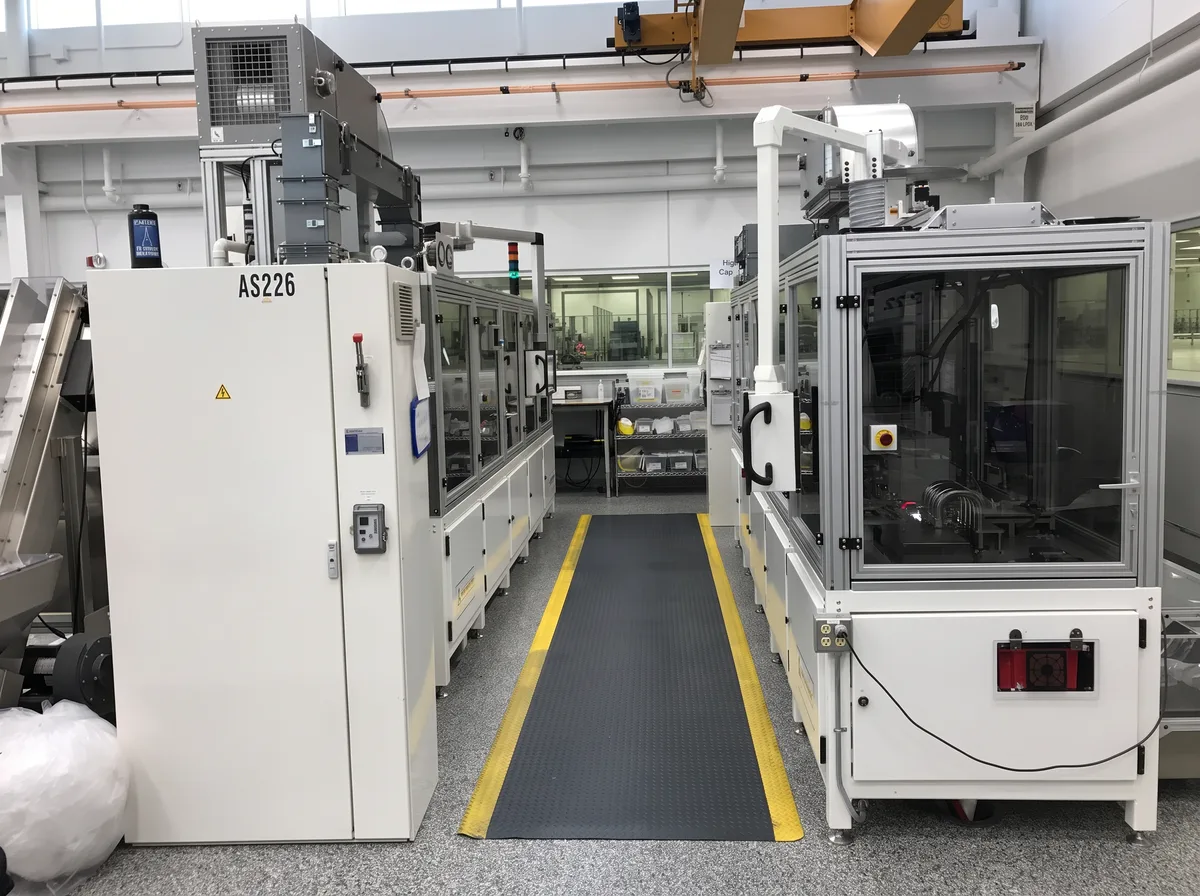
Not the automation vendor. This is the single biggest conflict of interest I see in medical device manufacturing. The vendor that built your machine should not be the one writing the qualification documentation for it.
They’re quoting against their own URS interpretation. They’re testing against specs they defined. If something doesn’t pass at FAT, the pressure is to change the acceptance criteria rather than fix the machine. I’ve been in that room. It happens.
The documentation ownership should sit with an independent engineering function. Someone who understands the GAMP process, has access to the URS, and has no stake in whether the machine passes or fails any individual test. That person maintains the trace matrix, reviews the FAT/SAT documentation for completeness, and ensures the IQ/OQ/PQ protocols test what the URS actually requires.
For medical diagnostic manufacturers running 1 or 2 automation projects a year, hiring a full-time senior validation engineer doesn’t make financial sense. That’s where a fractional automation engineer fills the gap. Someone who shows up with the documentation framework, builds the trace matrix, manages the vendor through FAT/SAT, and hands your quality group a clean IQ/OQ/PQ package they can defend in front of an auditor.
MEPSCo GAMP provides exactly that. I’ve done this across 96+ projects, from cartridge filling lines for IVD companies to high-volume diagnostic assembly systems. The documentation structure is the same. The trace matrix format is the same. And when FDA asks a question about any requirement, there’s a clear answer within 30 seconds, not 3 days of searching through file cabinets.
Sources: ECA/gmp-compliance.org — FDA Warning Letter Statistics on Medical Devices, Fiscal Year 2025; eCFR — 21 CFR Part 820.
What Medical Device Manufacturers Ask About IQ/OQ/PQ
Can I use the FAT documentation as my IQ?
Partially. The FAT tests equipment function at the vendor’s facility. IQ tests the same equipment at your facility after installation. Utility connections, environmental conditions, and site-specific calibrations are different. Use FAT results as reference data, but don’t copy-paste FAT protocols and call them IQ. Your auditor will notice the address on the calibration certificate doesn’t match your building.
How many PQ runs do we actually need?
3 consecutive successful runs is the standard starting point, but your quality group should determine the actual number based on process risk and product variability. A cartridge filling process with 6 different reagent formulations might need more. A single-product line with tight material specs might justify 3. The rationale goes in your validation plan, and the auditor will read it.
What happens if we find a deviation during PQ?
Document it immediately. Investigate the root cause. Assess impact on product quality and all prior test results. If the deviation invalidates a run, you repeat that run after corrective action. If it’s minor and doesn’t affect product, document why and keep going. What you don’t do is pretend it didn’t happen. Undocumented deviations are the fastest way to turn a routine audit into a 483.
Do we need separate IQ/OQ/PQ protocols for each piece of equipment?
Yes, unless the equipment is identical (same model, same configuration, same software version) and you’ve justified a family approach in your validation plan. Even then, each unit needs its own IQ because installation conditions vary. Two identical filling machines in two different cleanrooms have different utility connections, different environmental baselines, and potentially different calibration instruments.
Our automation vendor says they’ll handle all the validation documentation. Should we let them?
I wouldn’t. This creates a conflict of interest. The vendor is writing requirements, building the machine, and then testing it against requirements they wrote. When something fails, the incentive is to adjust the documentation rather than fix the equipment. An independent engineer or fractional automation engineer should own the documentation process. The vendor provides input. They don’t own the pen.
Start With the Trace Matrix. Everything Else Follows.
If you take one thing from this post, it’s this. Build the trace matrix on the day the URS is signed. Update it at every project milestone. Every requirement gets traced forward through design, FAT/SAT, and into IQ/OQ/PQ. No gaps. No orphaned tests. No disconnected protocols.
Do that, and your qualification package practically writes itself. Skip that, and you’ll spend weeks reconstructing traceability after the fact, at 3 times the cost, with half the confidence.
If you’re planning an automation project and want the IQ/OQ/PQ documentation structured for audit readiness from the start, schedule a Manufacturing Automation Assessment with MEPSCo GAMP. I’ll walk through your project scope, documentation requirements, and validation timeline before a single protocol gets written.