
What FDA Auditors Look For in Equipment Validation Documentation

FDA auditors evaluate equipment validation documentation for 3 things: proof the process was properly validated, evidence it remained in a validated state, and data showing it handles product variability.
FDA auditors aren’t checking whether you have documents. They’re checking whether those documents prove your manufacturing process was properly validated, stayed validated, and can handle real-world product variability. The trace matrix is your single biggest make-or-break artifact. Without it, everything else falls apart.
I’ve walked into facilities the day after an FDA audit went sideways. The paperwork was there. Binders were thick. And the 483 observation still landed, because the documents didn’t actually prove what they needed to prove.
That’s the part manufacturers keep getting wrong about GAMP documentation. Having validation documents isn’t the same as having the right validation documents. FDA auditors aren’t librarians. They’re investigators. They walk in with a specific set of questions, and if your documentation can’t answer those questions clearly and quickly, you’ve got a problem.
I’ve been doing this for over 25 years, across 96+ automation procurement and validation projects for medical device and diagnostic manufacturers. Here’s what I’ve learned about how FDA actually evaluates your equipment validation package.
What Does “State of Control” Actually Mean to an FDA Auditor?
When FDA walks in, they want to see whether your manufacturing process is in a validated state right now. Not whether it was validated once. Whether it’s validated today.
That distinction kills more audits than bad paperwork. A process can pass validation on day 1 and be completely out of control 6 months later if you haven’t documented changes, maintained calibration records, and tracked performance data over time.
Under ISO 13485 clause 7.5.6 (which the QMSR incorporated in place of the old 21 CFR 820.75), FDA requires validation for any process where the results cannot be fully verified by subsequent monitoring or measurement. For medical diagnostic manufacturing, that covers almost everything. Fill volumes. Seal integrity. Reagent dispensing accuracy. You can’t inspect your way out of a bad process.
The FDA’s own inspection guide puts it plainly. Firms must show they can operate within established limits, and that operation within those limits produces acceptable product. If your documentation doesn’t demonstrate ongoing control, the auditor writes a finding.
I tell every client the same thing. If you can’t show that you are in a state of control with your manufacturing process, that’s where you’re gonna find problems when FDA shows up for their audit.
The Trace Matrix: Where Audits Succeed or Fall Apart
The requirements trace matrix is the single document that makes or breaks your audit. Full stop. It’s the thread that connects your User Requirements Specification through design, FAT, SAT, and into IQ/OQ/PQ validation.
An auditor will pull one requirement from your URS, then trace it forward. Did it appear in the functional specification? Was it tested during the Factory Acceptance Test? Was it verified during site installation? Does your IQ confirm the equipment meets it? Does your OQ prove it operates within limits? Does your PQ demonstrate consistent output under production conditions?
If the trace breaks at any point, that’s a finding.
And it happens constantly. I’ve seen projects where the URS had 200+ line items. The vendor quoted against it, built the machine, ran FAT. But nobody maintained the trace matrix through the full lifecycle. Requirements drifted. Some were tested at FAT but not at SAT. Others were verified during OQ but had no corresponding URS entry. By the time validation started, nobody could point to a single document that showed end-to-end traceability.
When that URS interview process isn’t done properly, and the document doesn’t capture specs and quality checks in sufficient detail, the downstream documentation inherits every gap. FDA finds those gaps. Every time.
How FDA Evaluates Your IQ/OQ/PQ Package
FDA doesn’t treat IQ, OQ, and PQ as checkboxes. They treat them as evidence that your process was qualified in layers, with each layer building on the one below it.
| Stage | What FDA Evaluates | Common Failure Points | Requalification Trigger |
|---|---|---|---|
| IQ (Installation Qualification) | Equipment installed per manufacturer specs; calibration records; utility connections; environmental requirements | Missing calibration certificates; no documentation of facility conditions at install | Equipment moved to new location; major component replacement |
| OQ (Operational Qualification) | Equipment functions within upper and lower operating limits; worst-case conditions tested; alarms and controls verified | Testing only at nominal conditions; no defined operating limits; skipping worst-case scenarios | Software or firmware update; utility change; calibration failure |
| PQ (Performance Qualification) | Consistently produces acceptable output under normal production with trained operators and approved materials | Run with single product lot; no sampling plan; acceptance criteria not predefined | Product formulation change; new substrate or material; supplier switch |
The FDA inspection guide specifically notes that a new IQ is required whenever equipment is moved. Relocated a filling line without requalifying? That’s a finding waiting to happen.
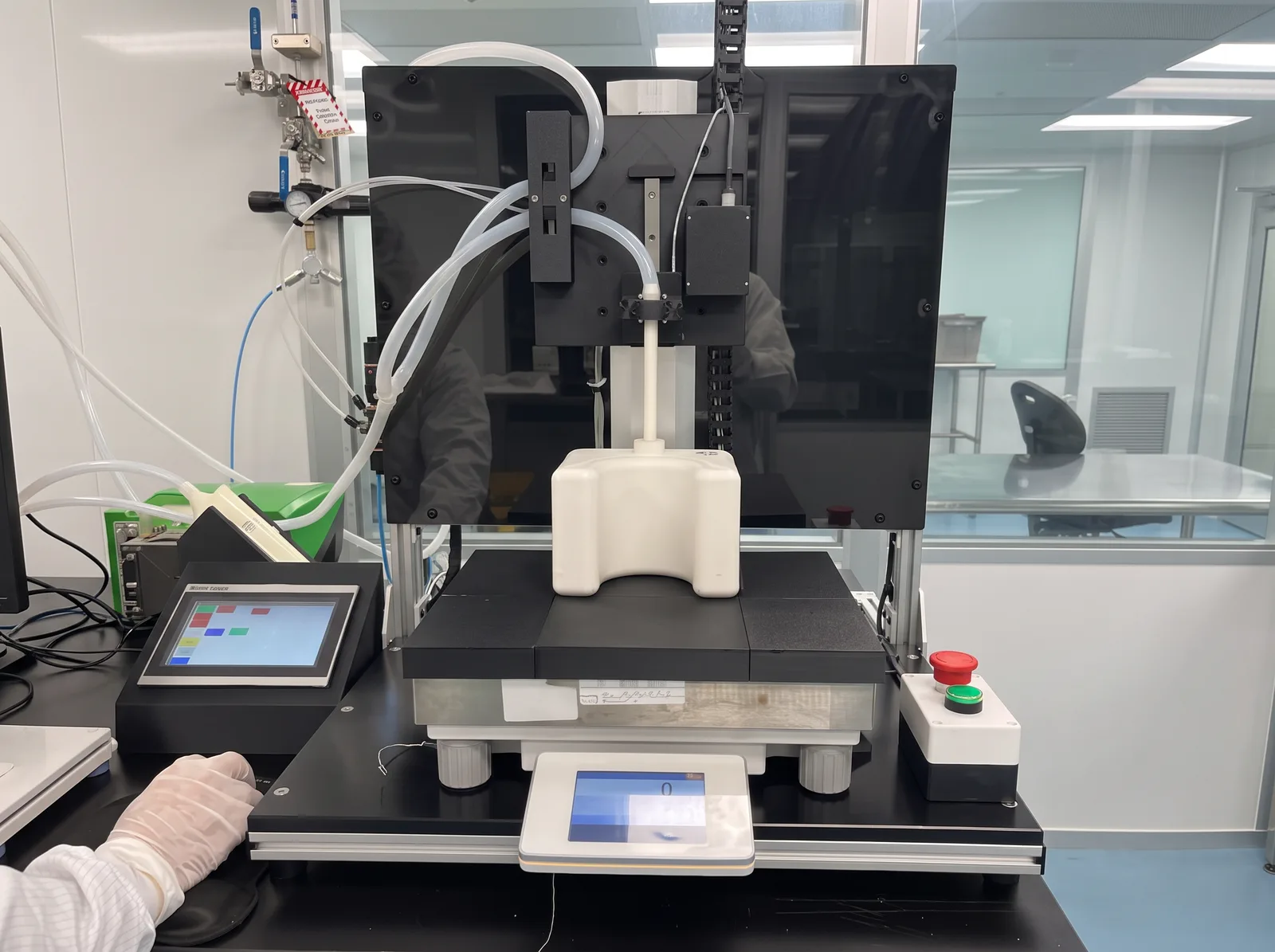
Here’s what trips up diagnostic manufacturers specifically. The PQ needs to account for actual variability in your product. Reagent lot changes, molding variations, substrate differences. If your PQ was run with one lot of reagent and you’re now on lot 47, and you haven’t demonstrated that the process handles that variability, the auditor has a question you can’t answer.
Product Variability: The Hidden Audit Trap for Diagnostic Manufacturers
This is where diagnostic and IVD manufacturers face a uniquely tough standard.
Your product changes. Reagent formulations shift between lots. Bead characteristics vary. Viscosity fluctuates with temperature. Molded components come in with dimensional variation from run to run. Your automation needs to handle all of that and still produce output within spec.
FDA expects your validation to account for these variables. Not theoretically. With data. Engineering studies should characterize how product variability affects fill accuracy, seal integrity, leak detection sensitivity, and throughput.
I worked on a project where a manufacturer had a perfectly validated filling line. Beautiful documentation. Then they switched reagent suppliers and the new formulation was foamier. Fill volumes went out of spec within the first week. The machine was fine. The process was fine. But the validation hadn’t accounted for reagent variability, and FDA noticed during their next inspection.
That’s the gap. Your validation package needs to demonstrate that you understood the variables, tested against them, and proved the process handles them. Without that, you’re showing FDA a snapshot of one good day. Not evidence of a controlled process.
Common Form 483 Observations in Equipment Validation
Process validation consistently ranks among the top 5 FDA Form 483 observations for medical device manufacturers. Equipment-related deficiencies jumped from 11th to 5th in 2020. And as of September 2025, FDA had issued 19 device QSR warning letters, up from 12 at the same point in 2024. The scrutiny isn’t letting up.
Here’s what shows up in 483s and warning letters over and over again when it comes to validation.
- Equipment not adequately qualified before use in validation runs. One warning letter cited a manufacturer for using a gas chromatograph that was “not adequately qualified,” with no validated control system and no audit trail activated
- Calibration records missing or showing instruments out of calibration at the end of a study. FDA’s inspection guide says that finding calls the entire study’s validity into question
- No documented evaluation of process changes to determine whether revalidation was needed. A machine runs for 3 years, components get swapped, firmware gets updated, and nobody assessed whether the validated state still holds
- Validation protocols missing acceptance criteria, sampling plans, or provisions for handling out-of-spec results
- Audit trails on computerized systems either not activated or showing data files that can’t be found on the system
- Last-article test failures. FDA flags these as evidence the process wasn’t in a steady state of control during the validation run
FDA is also using AI tools like ELSA to prioritize inspections based on complaint data, adverse events, and past inspection outcomes. If your facility has had validation-related findings before, you’re higher on the list.
Engineering Studies That FDA Expects You Already Ran
Before you ever write an IQ protocol, FDA expects you to understand your process well enough to define its parameters and limits. That understanding comes from engineering studies.
Engineering studies characterize how process variables interact with product variables. For a diagnostic fill line, that means understanding how pump speed affects fill volume accuracy across different reagent viscosities. How temperature changes affect seal integrity. How bead concentration variability affects dispensing consistency.
These studies happen before validation. They’re what tell you what your operating limits should be. Without them, your OQ limits are arbitrary and your PQ acceptance criteria are guesses.
The FDA process validation guidance says it directly. A process “must be fully developed, with established parameters, before it can be validated.” Running validation before you’ve characterized your process is building a house before you’ve tested the soil. It might stand. But you’ve got no evidence it will.
For IVD and diagnostic manufacturers, this is especially critical. Reagent characteristics change. Substrates vary. If you haven’t studied those variables systematically, your validation sits on assumptions. Assumptions don’t survive audits.
What Proper GAMP Documentation Looks Like Under Audit Scrutiny
When I work with a manufacturer on a GAMP-compliant automation project, the documentation package tells a complete story. Start to finish. URS through validation, with every requirement traced.
The URS captures what the machine needs to do, based on thorough interviews with operations, quality, engineering, and R&D. Not a vendor-written spec. An operator-driven spec that accounts for the product, the process, and the facility.
The trace matrix connects every URS requirement through functional specifications, design, FAT, SAT, and into IQ/OQ/PQ. No gaps. No orphaned requirements.
The FAT and SAT documentation proves the equipment was tested at the vendor’s facility and again at your site, with discrepancies documented and resolved before validation begins. If the FAT and SAT were done correctly, the qualification becomes a structured verification of what was already proven. If they weren’t, it becomes a scramble.
I ran validation on a $150M DOD pandemic project for Hologic. Zero change orders. The documentation held up because we followed the process from day 1. Every requirement traced. Every test documented. Every deviation captured and resolved. When the pressure was on to deliver fast, the documentation actually made things faster, not slower.
Compare that to a project I inherited where a manufacturer bought a retrofitted filling machine and skipped the GAMP process entirely. When it came time for validation, there was no URS to trace back to. No FAT results. No basis for the IQ/OQ/PQ protocols. The entire validation had to be built from scratch after the machine was already installed. That project ran months over schedule.
GAMP documentation gaps before an FDA audit are behind the bulk of validation findings I’ve seen in 25+ years. The gaps don’t start in validation. They start in the URS.
What This Comes Down To
FDA auditors aren’t looking for perfection. They’re looking for evidence. Evidence that you understood your process, validated it properly, maintained it in a validated state, and accounted for the variability in your product.
The manufacturers who pass audits cleanly aren’t the ones with the thickest binders. They’re the ones with a clear trace from URS through validation, engineering studies that characterize their process variables, and ongoing monitoring that proves the process stays in control.
If your documentation can’t tell that story from beginning to end, now is the time to fix it. Not when the auditor is standing in your facility.
MEPSCo GAMP builds audit-ready GAMP documentation packages for medical device and diagnostic manufacturers. If you want to know whether your validation documentation would survive an FDA inspection, start with a Manufacturing Automation Assessment.
Questions Manufacturers Ask About FDA Equipment Validation Audits
How far back do FDA auditors typically look at validation records?
There’s no fixed window. Auditors can request records from the entire lifecycle of the equipment and process. If your machine’s been running for 8 years and you can’t show ongoing calibration, maintenance, and revalidation records for the full period, that’s a problem. Keep everything.
Can we use the same validation documentation for multiple product lines on the same equipment?
Only if each product line was part of the original validation scope or added through a documented change control process with appropriate revalidation. Running a new product on validated equipment doesn’t automatically mean the process is validated for that product. Different reagent viscosities, different fill volumes, different substrates. All require their own qualification data.
What’s the difference between verification and validation in FDA’s eyes?
Verification confirms something meets a design output. You can verify by inspection, testing, or demonstration. Validation confirms a process consistently produces results meeting predetermined specifications. Think of it this way. Verification is a checkpoint. Validation is proof of a controlled process. FDA has issued warning letters specifically because manufacturers confused the 2.
Does FDA accept electronic validation records, or do they want paper?
Electronic records are fine, provided they comply with 21 CFR Part 11 requirements for electronic records and signatures. Audit trails, access controls, data backup, ability to produce legible copies on demand. The catch? Plenty of manufacturers have electronic systems that don’t actually meet Part 11 standards. FDA cited one manufacturer because their GC computer didn’t have backup, the audit trail was off, and data files had gone missing.
How often should equipment be revalidated?
Not on a calendar. On events. Any change to the equipment, the process, the product, the facility, or the software triggers an evaluation of whether revalidation is needed. Moving a machine. Replacing a critical component. Updating firmware. Switching reagent suppliers. All of those require documented assessment and, frequently, requalification. The validated state isn’t permanent. It has to be maintained.
So what exactly does the trace matrix need to include?
Every requirement from the URS, traced forward through functional specifications, design outputs, FAT test results, SAT results, and IQ/OQ/PQ protocols. Each line item should show the requirement, which document addresses it, what test verifies it, the result, and who signed off. If an auditor picks any single URS requirement and can’t follow it through to validation, you’ve got a gap. 200 line items is common on a fill line. Every one needs to trace clean.
The Bottom Line
FDA auditors aren’t looking for perfection. They’re looking for evidence.
If you want to know whether your validation documentation would survive an FDA inspection, start with a Manufacturing Automation Assessment, or reach out directly.