
Why CDMO Equipment Validation Gets Complicated When You Have Multiple Clients
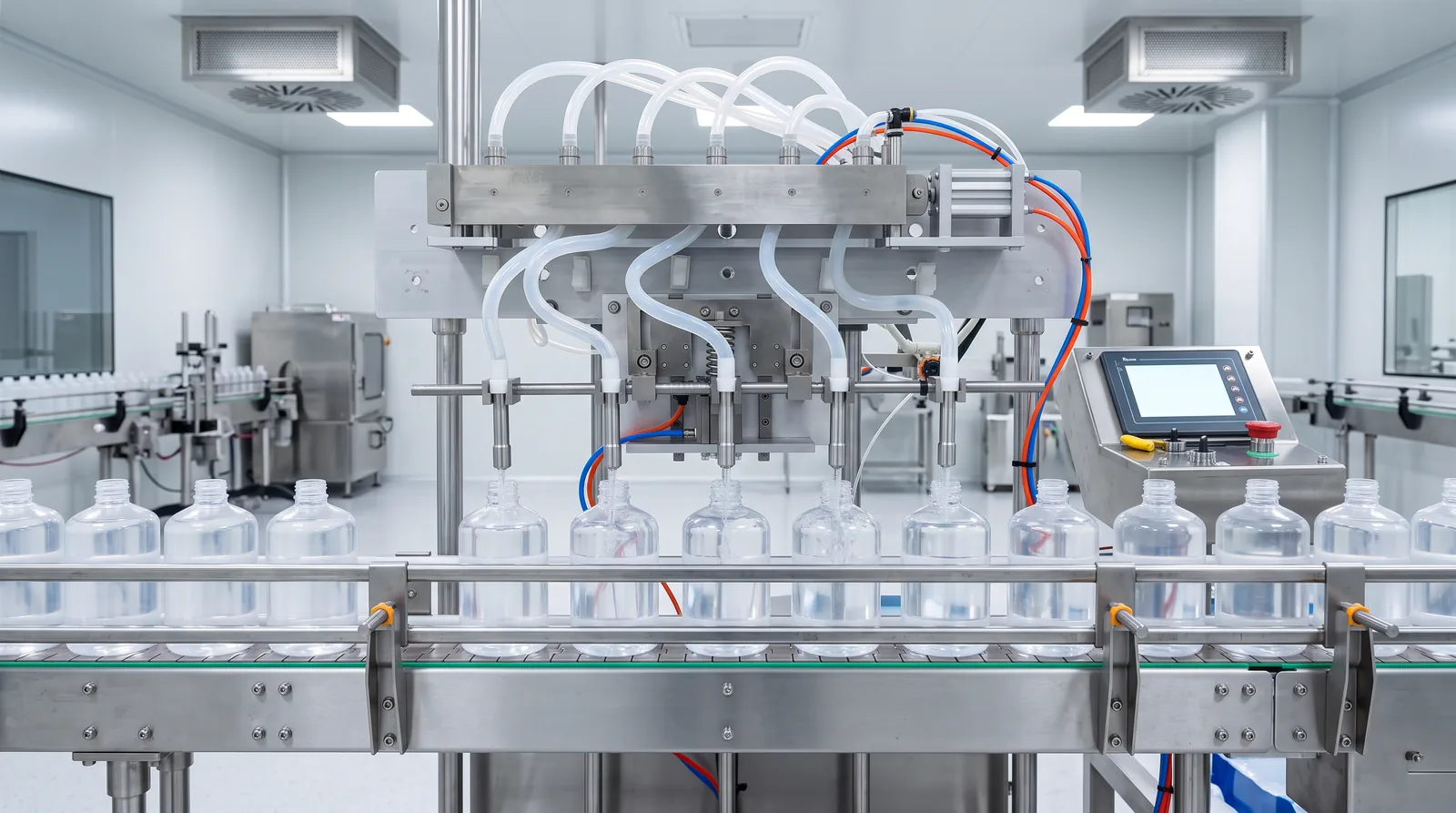
When a CDMO runs one fill line for three different diagnostic clients, the equipment qualification problem multiplies. One set of IQ/OQ records, potentially three separate Performance Qualification runs, and documentation gaps that show up differently in each client audit. Most CDMOs don’t plan for this. The ones that do write a better URS.
A CDMO that runs product for multiple clients on shared equipment is managing a documentation problem most people underestimate until they’re in the middle of a client audit.
It’s not that shared equipment can’t be properly validated. It can. The challenge is that the validation documentation has to account for every product, every parameter range, and every client-specific cleaning requirement — at the time the equipment is procured, not after the first audit finds the gaps.
By the time a client auditor asks to see your validation documentation, you’re not revising the URS. You’re either defending what you have or explaining what’s missing.
What Makes Shared Equipment Different From Dedicated Equipment
When a manufacturer buys a fill line for one product, the validation scope is bounded. The URS describes what the equipment needs to do. The IQ confirms it’s installed correctly. The OQ confirms it operates within spec. The PQ confirms it produces acceptable product consistently. Once those three are done and signed, you have a qualified piece of equipment.
Add a second client with a different reagent, a different fill volume, and a different acceptable residue threshold. Now what?
The IQ documentation stays the same — the equipment is installed the same way regardless of what product runs through it. The OQ stays the same — the operating envelope doesn’t change per product. But the PQ might not. If Client B’s product has different viscosity characteristics, different acceptable particle distribution, or runs at a different temperature, you may need a separate PQ run to demonstrate the equipment performs to spec for that product specifically.
Now add cleaning validation. Client A requires that no more than X parts per million of their reagent components remain on wetted surfaces before Client B’s product runs. Client B has their own threshold. These are not the same number. They’re often not even calculated the same way.
If that complexity isn’t captured in the URS before the vendor starts building, you’re adding it as a change order. Or you’re retrofitting it into the documentation after the equipment is already installed. Neither is cheap. Neither is fast. And neither makes the client auditor feel better when they see a change control record dated six months after equipment commissioning.
The Audit Exposure Is Real
CDMOs know FDA audits them. Most CDMOs don’t fully internalize that their clients audit them too — and that client auditors are often more thorough on equipment validation than FDA inspectors, because the client’s product is what’s at risk.
Regulatory violations are now the single most-cited reason sponsors disqualify a CDMO during bid evaluation, ahead of cost and timeline. PharmaSource’s March 2026 analysis of ISR’s Bioprocessing Market Outlook (n=100) found that 26% of decision-makers named regulatory violations or FDA 483 warnings as the primary reason a CDMO was disqualified. FDA CDER warning letters with manufacturing/GMP subjects nearly tripled from 39 in 2023 to 111 in 2025.
Those numbers are pharma-side, but the enforcement trajectory applies across device and IVD contract manufacturing. When FDA says contract manufacturing facilities are treated as “extensions of the manufacturer’s own facility”, the quality failures that show up in audits aren’t abstract. They’re what costs a CDMO a contract.
Equipment validation documentation is exactly the kind of record both client and FDA auditors check. IQ/OQ/PQ protocols and executed records. Change control entries. Cleaning validation data. Deviation records from FAT. If those records don’t exist, don’t match the equipment, or don’t cover the full product range running on the line, the audit fails.
The Three Places Documentation Breaks Down
Most CDMOs that end up with shared equipment validation problems can trace them to one of three points in the procurement process.
At the URS
The URS is where the documentation complexity either gets captured or gets avoided. A URS written for one client, on a line that will later serve three, doesn’t describe the full operating envelope. When the second client comes on board, the URS doesn’t cover their product. So you’re either revising the URS retroactively (triggering change control) or running qualification for Client B against a URS that was never written for their product.
The fix is straightforward in concept and harder in practice: write the URS for the line’s intended full capacity, not just the first client’s requirements. That means knowing at URS time which product types, fill volumes, and cleaning protocols the line will need to handle. If that information isn’t available when the URS is written, it needs to be explicitly flagged as a future change that will require documented change control.
At FAT
Factory Acceptance Testing at a vendor facility is supposed to catch what won’t survive IQ/OQ/PQ. At a CDMO running multiple products, FAT should test the equipment against the broadest parameter range it will ever run — not just the first client’s specs.
If FAT was run only against Client A’s product parameters, and Client B’s reagent behaves differently at the lower end of fill volume tolerance, that difference doesn’t show up in your FAT record. It shows up at PQ. Or it shows up at the client audit.
Shared-equipment FAT requires a documented FAT protocol written to test the full operating envelope. The protocol needs to be written before FAT is scheduled, not assembled during the visit.
At PQ
Performance Qualification is where shared equipment documentation gets expensive if the upstream documents weren’t built to support it. If the URS doesn’t describe Client B’s parameters, the PQ protocol for Client B can’t trace back to a documented requirement. The QA reviewer asks what requirement the PQ is qualifying against. The answer becomes awkward.
CDMOs that get this right build the PQ architecture into the documentation structure early. One IQ, one OQ, multiple PQ protocols — one per product family if needed — all tracing back to a single URS that was written to support them.
What the URS Should Actually Say for a Shared Line
A URS for shared equipment isn’t longer than a URS for dedicated equipment. It’s more disciplined about what gets specified.
It describes the fill volume range — not just the first client’s volume. It describes acceptable fill accuracy across that range. It describes the reagent types the line will handle, including viscosity ranges, foamability, and any particular handling requirements. It describes cleaning protocol requirements and how they interact with the product changeover sequence. It describes the throughput requirements for each product that will run on the line. And it flags, explicitly, what parameters are product-specific versus line-specific.
That discipline at the URS stage is what makes multi-client PQ manageable instead of a documentation reconstruction project.
For CDMOs that already have shared equipment installed without that documentation structure, retrospective qualification and the GAMP documentation process is a harder path, but it’s not impossible. The scope depends on what documentation exists from the original procurement. What’s available from FAT, whether the original URS can be revised under change control, and what the current audit posture looks like all affect the approach.
Knowledge Transfer Is the Part CDMOs Skip
Even when the initial qualification is done well, shared equipment creates a knowledge transfer problem that doesn’t exist for dedicated equipment.
When a CDMO qualifies a fill line for one client, the engineers who ran the qualification understand it. They know what the PQ results showed. They know which deviation was closed and how. They know why the nozzle configuration is set the way it is.
When Client B comes on board 18 months later, those engineers may not be there. The qualification records exist, but the institutional knowledge doesn’t. The second PQ gets run by people who are working from documents, not from experience.
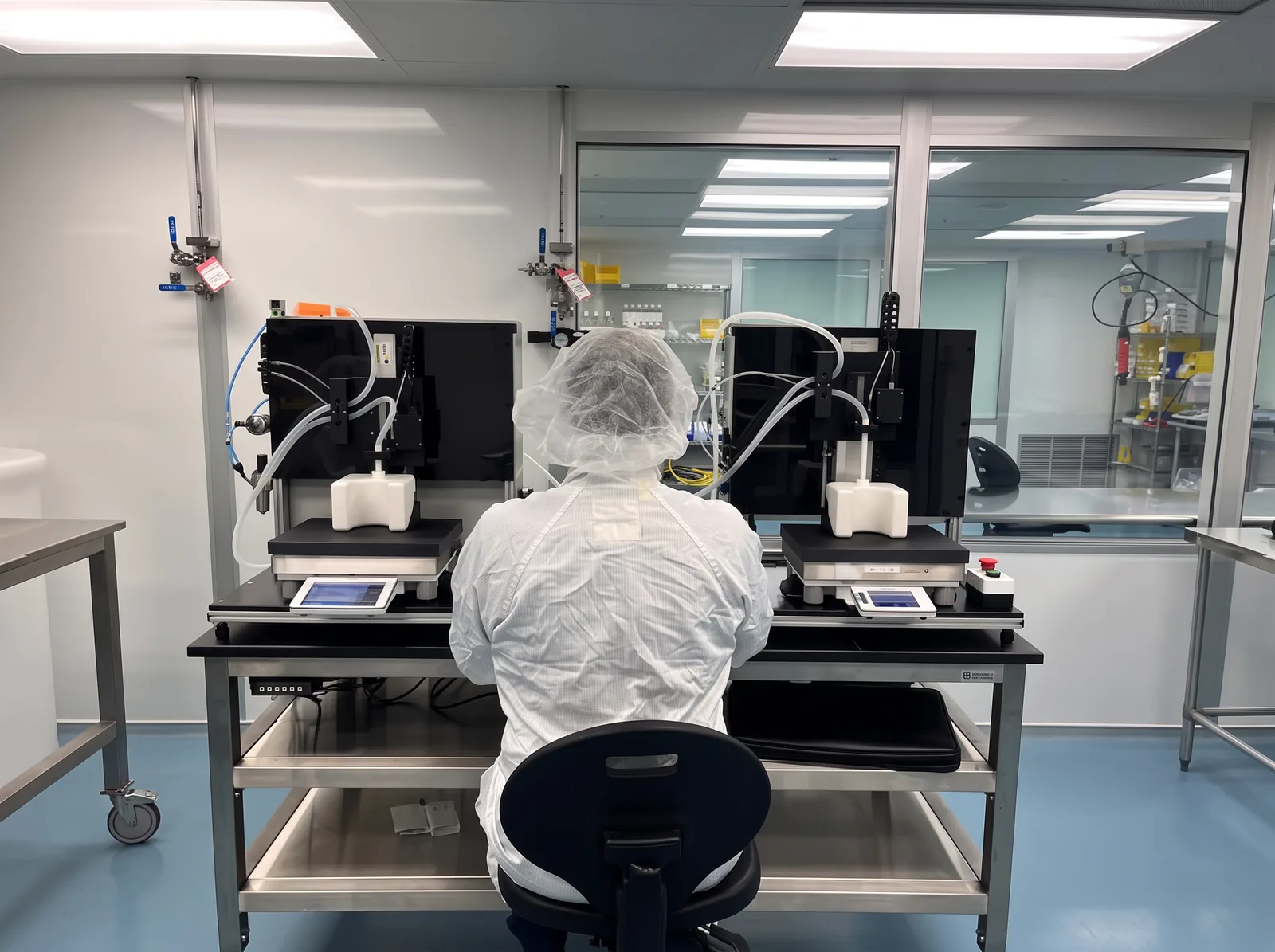
That gap is why MEPSCo builds knowledge transfer into the GAMP engagement from the start. The goal isn’t just to produce documentation that passes the first audit. It’s to produce documentation that your team can work from, add to, and maintain as new products come on board and new engineers take over. The documentation is a living system, not a one-time deliverable.
In the 80 PPM assembly equipment deployments across multiple CMO facilities, the same documentation structure was transferred to each facility’s engineering team before MEPSCo moved to the next site. The result was 95% uptime running 24/7 — not because the machines were exceptional, but because the documentation and training were complete enough that each team could own their line.
Common Questions from CDMO Engineering Teams
Does each client product need its own IQ/OQ/PQ, or can they share documentation?
IQ and OQ documentation is typically shared across products on the same equipment — the installation and operating envelope are the same regardless of what’s being filled. PQ may need to be product-specific, depending on how different the product parameters are. If Client A’s reagent and Client B’s reagent behave similarly at fill conditions, one PQ protocol may cover both with range-tested data. If they’re materially different, separate PQ runs with separate protocols are usually the right approach. The URS should define the full parameter range up front so the PQ scope is clear before the equipment arrives.
Our CDMO has been running shared equipment for two years without formal GAMP documentation. How bad is the audit exposure?
It depends on what documentation exists and what the equipment was originally qualified against. If IQ/OQ was done at commissioning and only the PQ for additional products is missing, the path is narrower. If there’s no formal IQ/OQ at all, the exposure is more significant. Either way, the risk is what it is — the audit will find what it finds. The question is whether you address it proactively or defensively. Proactive qualification reconstruction is less expensive and goes better in audits than explaining why documentation doesn’t exist.
What’s cleaning validation, and why does it matter differently for shared equipment than dedicated equipment?
Cleaning validation demonstrates that your cleaning process removes residues of the previous product to an acceptable level before the next product runs. On dedicated equipment, cleaning validation is simpler — you’re cleaning off your own product. On shared equipment, you’re cleaning off Client A’s reagent before Client B’s product runs. If Client A’s reagent contains components that could affect Client B’s product performance or safety, that contamination risk needs to be quantified and your cleaning process needs to demonstrably address it. FDA and client auditors both check cleaning validation records. Gaps show up as observations.
How do we handle change control when a new client product comes on board after the line is already qualified?
The answer depends on how different the new product is from what the line was originally qualified to run. If the new product falls within the operating ranges already described in the URS and tested in OQ, you may be able to add it with a change control record and a targeted PQ run rather than a full requalification. If the new product requires the equipment to operate outside its documented operating range, that’s a larger scope change that may require URS revision, engineering assessment, and potentially additional OQ/PQ work. Getting that assessment done before committing to the client contract is the right time — not after.
Can the equipment vendor handle our GAMP documentation for shared equipment?
Vendors write their own equipment documentation — build records, factory test reports, and sometimes commissioning support. That’s not the same as GAMP validation documentation, and it’s not what client and FDA auditors are checking. The vendor’s incentive is to ship the equipment and move to the next order. GAMP documentation is your quality system’s responsibility, not the vendor’s. On shared equipment especially, the validation documentation needs to be written by someone who understands your multi-client operating requirements — not by the machine manufacturer who built to a spec for one client.
The Documentation Problem Is Solvable — Before It Becomes an Audit Problem
Equipment validation for CDMOs with multiple clients is genuinely more complex than validation for a dedicated production line. That’s not a reason to avoid it — it’s a reason to approach procurement differently.
The GAMP documentation structure that supports multiple clients without creating a requalification nightmare every time a new product comes on board gets built at the URS stage. After the equipment is installed, the options narrow.
If your CDMO is planning new equipment procurement for a shared line, or if you’re running equipment without the documentation structure to support multi-client audit scrutiny, MEPSCo GAMP’s CDMO automation procurement process starts with that documentation architecture, before vendor selection. If you want a review before your next RFQ goes out, schedule a project review with MEPSCo GAMP.
Looking at this problem from a timeline-pressure angle? Read how MEPSCo GAMP delivered two fill units to a CMO in under 2 months.
Procuring a Shared Line? Get the Documentation Architecture Right First
One IQ, one OQ, and a PQ architecture that traces every client’s product back to a URS written for the full operating envelope — that’s what keeps a multi-client line out of change-order and audit trouble. MEPSCo GAMP builds that documentation structure on the manufacturer’s side, before vendor selection.