Product Transfer and Scale Up from R&D to Engineering
The Starting Point
A medical device company needed to transfer a penetrable cap product from their R&D group into engineering for production. The product had only partially defined process parameters and quality specifications when it arrived.
Each foil was delivered with a 3.5-second weld process at the top and bottom, with a difficult-to-process wiping material sandwiched between them. Nobody had figured out a reliable production process yet. That was the job.
The initial manual process took 6 operators across 3 shifts to produce 1,000 caps per shift. That was the baseline.
Improving the Process Before Touching the Machine
Before procuring any equipment, I ran a Proof of Principle and Proof of Concept process. During POP and POC, I improved both welds and developed a better approach to cutting and placing the wiping material. I implemented improved manual production equipment into the process.
The result: 5,000 caps per shift. Same operators. 5x the output. Before a single automated machine was ordered.
That’s the point of POP/POC. You don’t commit to a machine until you know what the machine needs to do.
First Automation: 40 PPM
With a defined process in hand, I developed the URS for a 40 PPM assembly machine. The URS laid out every requirement: weld parameters, wiping material handling, inspection criteria, throughput targets, OEE requirements, and qualification standards.
I managed the procurement and qualification of the first machine. It worked. Two more 40 PPM machines were ordered and installed shortly after.
Scaling to 80 PPM
Demand for the product increased significantly — driven by the company’s novel automated assay systems — and a new production rate of 80 PPM was targeted.
A new URS was developed for the 80 PPM assembly equipment. Three vendors were solicited for quotes. The vendor selection wasn’t a price decision. I used a Kepner-Tregoe analysis — a structured scoring methodology — to evaluate each vendor against defined criteria: capability, track record, GAMP documentation support, responsiveness, and technical fit. The KT analysis identified the best partner. It wasn’t the lowest bid.
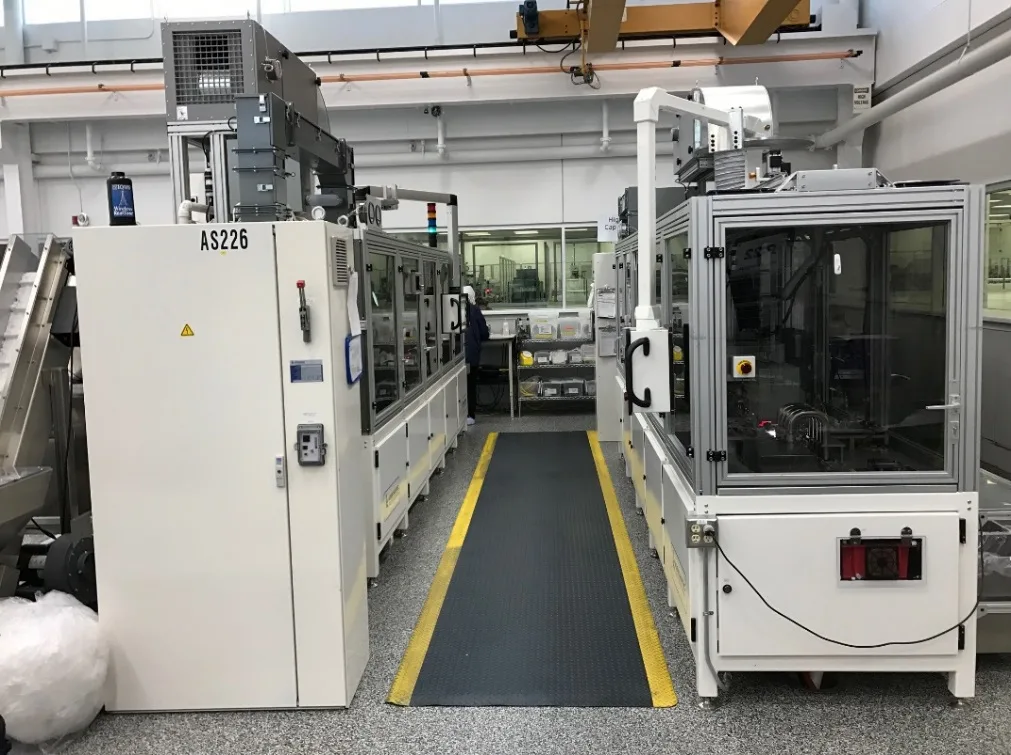
That choice mattered. The vendor relationship that resulted became a long-term partnership. Additional orders were placed. The machines were installed at multiple CMOs. I worked with each CMO to correctly place and qualify the first few units, then transferred a well-defined process to other engineers to continue.
caps per shift
equipment
80 PPM machines
The Outcome
The 80 PPM machines achieved 95% uptime running 24/7.
That number doesn’t happen by accident. It comes from vendor selection done right, a URS that defined maintainability requirements from the start, quick consumable change-out design, and GAMP documentation that gave the maintenance team what they needed to keep the equipment running without escalating every issue to engineering.
The documentation is what makes the machine run after the engineer is gone.
About This Project
What is a Kepner-Tregoe analysis and why does it matter for vendor selection?
Kepner-Tregoe is a structured decision-making methodology that scores options against weighted criteria. In vendor selection, it prevents the lowest bid from winning by default. Every vendor is evaluated on capability, track record, GAMP documentation support, and technical fit — not just price. On this project, the KT analysis identified the right partner. That relationship produced machines running at 95% uptime 24/7.
What does Proof of Principle and Proof of Concept mean in practice?
POP and POC are engineering studies run before committing to equipment procurement. On this project, POP/POC improved the weld process and wiping material handling and increased manual throughput from 1,000 to 5,000 caps per shift before a single automated machine was ordered. You don’t write a URS until you know what the process needs to do.
How did the 80 PPM machines achieve 95% uptime?
95% uptime on a 24/7 production line comes from decisions made before the machine is built: vendor selection based on capability not price, a URS that specifies maintainability requirements, quick consumable change-out design, and documentation that lets the maintenance team solve problems without escalating to engineering every time.
Can MEPSCo handle CMO qualifications?
Yes. On this project, Reza qualified the first units at multiple CMO facilities, established a defined process, and transferred it to other engineers to continue. CMO qualification follows the same GAMP process as internal manufacturing — the documentation standards don’t change based on who owns the building.
Book a Manufacturing Automation Assessment
Or download the GAMP Roadmap to see the full 8-step process.